
Organized by China University of Geosciences, Wuhan University of Technology, Nature Energy, Nature Nanotechnology, Nature Materials and Nature Catalysis.
The conference
Register Now Submit AbstractDeadline: Feb.21, 2027 Contact Us
Event details
Speakers
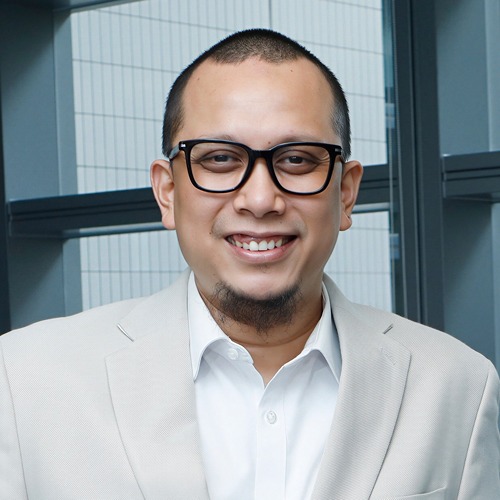
Fatwa F. Abdi
City University of Hong Kong, China
Fatwa F. Abdi is an Associate Professor in the School of Energy and Environment at City University of Hong Kong (CityUHK). He obtained his undergraduate and masters’ degrees in Materials Science and Engineering from Nanyang Technological University, National University of Singapore and Massachusetts Institute of Technology. After a brief stint in the semiconductor industry, he then received his PhD (cum laude) in Chemical Engineering from Delft University of Technology, the Netherlands, and was awarded the Martinus van Marum Prize by the Royal Dutch Society of Sciences and Humanities. Prior to joining CityUHK, he spent a decade at Helmholtz-Zentrum Berlin für Materialien und Energie, Germany, where he served as Group Leader and Deputy Director of the Institute for Solar Fuels. His research group focuses on the development of materials, devices, and integrated systems for solar-to-chemical conversion. Combining advanced characterization, multiphysics modeling, and device engineering, the work in his group spans topics ranging from fundamental charge carrier processes in photoelectrode materials to scalable technologies for solar fuel and chemical production.
Jae Sung Lee
Ulsan National Institute of Science and Technology (UNIST), Korea
Professor Jae Sung Lee received his BS degree from Seoul National University in 1975, MS degree from Korea Advanced Institute of Science and Technology in 1977, and PhD degree from Stanford University in 1984. After a brief tenure at Catalytica Inc. as a research fellow, he returned to his native Korea to become a professor of chemical engineering at Pohang University of Science and Technology (POSTECH). He and his group moved to Ulsan National Institute of Science and Technology (UNIST) in 2013. He has been leading a research group of the “eco-friendly catalysis and energy laboratory (Ecocat)”, whose research interests are focused on photocatalysis/photoelectrochemistry for solar energy conversion, electrocatalysis for water splitting, and heterogeneous catalysis of CO2 utilization. He has special interest in solar fuel production via photoelectrochemical cells for practical applications.
He served as the President of Korean Association of Photo Science (KAPS) and the Treasurer of Asian Pacific Association of Catalysis Societies (APACS). He is a member of Korean Academy of Engineers. He is (or was) in the editorial boards of Journal of Catalysis, Applied Catalysis A, Journal of Molecular Catalysis, ChemCatChem, Catalysts, Catalysis Letters, and Artificial Photosynthesis. He served as a technical advisor for many Korean chemical companies including Sam Sung Petrochemicals, Sam Sung Advanced Institute of Technology, and LG Chemicals. He was the recipient of Green Energy Prize 2005 (Korean Society of Energy Engineering) and Yeosan Catalysis Research Prize 2010 (Korean Institute of Chemical Engineers). He has ⁓470 peer-reviewed publications, which have been cited more than 38000 times (H-index: 107 by WoS), and ~100 granted patents.
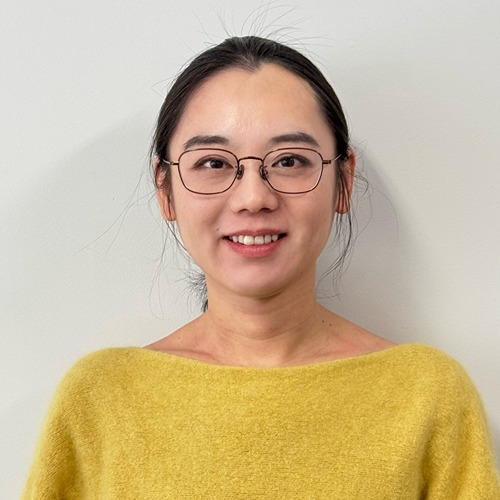
Qian Wang
Nagoya University, Japan
Qian Wang is a Professor at Nagoya University, Japan. She received her Ph.D. from the University of Tokyo in 2014 and continued her research there as a postdoctoral researcher within the Artificial Photosynthetic Chemical Process Technology Research Association project. In 2018, she was awarded a Marie Skłodowska-Curie Fellowship and moved to the University of Cambridge, where she further developed her research in artificial photosynthesis. In 2021, she returned to Japan to join Nagoya University as an Associate Professor and was promoted to Professor in 2025, establishing her own research group. Her research team focuses on developing new materials, strategies and technologies for artificial photosynthesis, with the goal of efficiently converting solar energy into renewable fuels and chemicals.
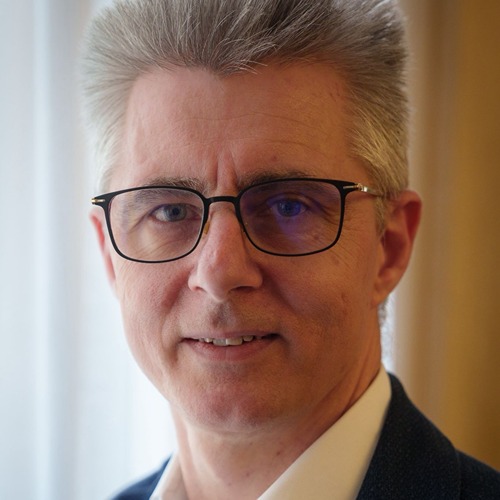
Paolo Fornasiero
University of Trieste, Italy
Paolo Fornasiero is Full Professor and Chair of Inorganic Chemistry at the University of Trieste, where he also serves as Vice-Rector for Research. His research focuses on multifunctional nanomaterials for heterogeneous catalysis, energy conversion, and environmental sustainability.
He has co-authored more than 370 scientific papers, receiving over 44,000 citations. He has served as Associate Editor of ACS Catalysis since 2015 and as Executive Editor since 2021. He is a member of the Accademia dei Lincei, Academia Europaea, and the European Academy of Sciences, and has received numerous national and international awards, including the 2016 Heinz Heinemann Award and the 2026 Royal Society of Chemistry Environment, Sustainability and Energy Horizon Prize.