
Organized by East China University of Science and Technology (ECUST), Nature Chemical Engineering, Nature Chemistry, Nature Materials, Nature Reviews Electrical Engineering and Nature Synthesis.
Dynamic chemistry, spanning noncovalent, supramolecular and dynamic covalent chemistry, has emerged as a powerful framework for designing stimuli-responsive molecules and adaptive materials. By offering versatile molecular tools for creating constitutionally dynamic materials, it is driving advances in molecular devices, smart materials, optoelectronics, and bio-imaging and sensing.
With recognised strengths in precision synthesis, functional molecules and dynamic materials, ECUST is well positioned to host an international conference that brings together cutting-edge research and institutional expertise while fostering global collaboration. The conference will highlight advances in dynamic chemical mechanisms and processing, molecular design and precision synthesis, photo-responsive molecules, molecular machines, smart emissive materials, and emerging devices and applications, while providing early-career researchers with opportunities to engage with leading scientists.
Register Now Submit Abstract Deadline: Feb.1, 2027 Contact Us
Event details
Speakers
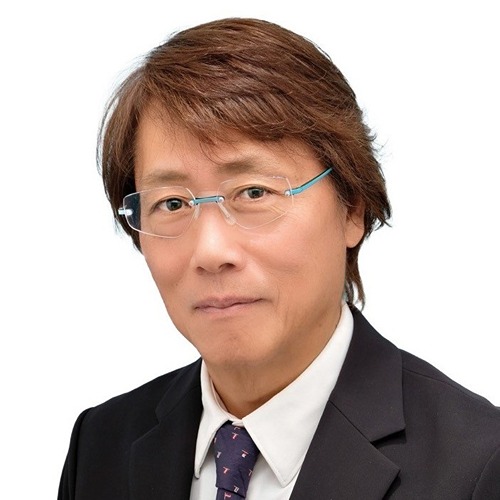
Chihaya Adachi
Kyushu University, Japan
Prof. Chihaya Adachi obtained his doctorate in Materials Science and Technology in 1991 from Kyushu University. He held positions as a research chemist and physicist in the Chemical Products R&D Center at Ricoh Co., a research associate at Shinshu University, a research staff at Princeton University, and an associate professor and professor at Chitose Institute of Science and Technology. In 2005, he returned to Kyushu University as a professor and was promoted to a distinguished professor in 2010, and his current posts also include director of Kyushu University’s Center for Organic Photonics and Electronics Research (OPERA) since 2010 and director of the Fukuoka i3 Center for Organic Photonics and Electronics Research since 2013. His research has been concentrated on organic synthesis, device fabrication, and optical and electrical device characterization of organic semiconductors. He has been serving as an editor of “Organic Electronics” (Elsevier) (2007-2019) and CCS Chemistry (2019-). His publications include over 780 research papers. He was selected as a highly cited researcher (Clarivate) (2018-2025) and he was awarded Clarivate Citation Laureates 2026.
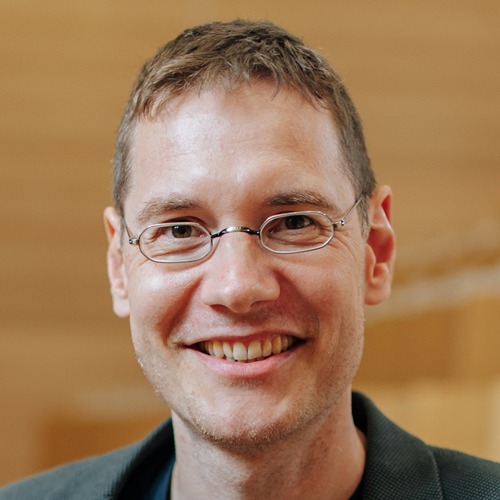
Henry Dube
FAU Erlangen-Nürnberg, Germany
Henry Dube studied chemistry at the Philipps-University Marburg and the LMU Munich. After his diploma thesis with Paul Knochel he joined the group of François Diederich at the ETH Zurich for his Ph.D. There he worked on synthetic models for heme proteins. Henry then moved to The Scripps Research Institute in La Jolla as a postdoctoral research fellow to pursue his interest in supramolecular self-assembly in the group of Julius Rebek, Jr. He started as an independent research group leader at the LMU Munich in 2011 as Liebig-Fellow. From 2014 on he led an Emmy-Noether junior group at LMU. In 2020 he accepted the Chair of Organic Chemistry position at the FAU Erlangen-Nürnberg in Germany after declining a call from the University of Cologne. His current research interests are centered on organic and physical organic chemistry and span the areas of molecular machines, photochemistry, supramolecular chemistry, and chemical biology. His group has made seminal contributions to the field of molecular motors, gearing systems, and integrated machines, as well as molecular photoswitches and photoreactions. These developments led to unique applications in catalysis, smart materials, and chemical biology.
Awards and Distinctions
- 2026 Chemistry Europe Lecture at ISOP Symposium 2026, Groningen, The Netherlands
- 2026 Momentum Grant, VolkswagenStiftung
- 2020 ERC Consolidator Grant, European Research Council
- 2019 Professorship call (W3, accepted), FAU Erlangen-Nürnberg, Germany
- 2019 Professorship call (W2-Tenure to W3, declined), University of Cologne, Germany
- 2018 Research award of the Dr. Otto Röhm Gedächtnisstiftung
- 2018 Arnold-Sommerfeld Award of the Bavarian Academy of Sciences and Humanities
- 2017 Dr. Klaus Römer-Foundation Young Investigator Award
- 2017 Awarded “Best presentation of Early Career Researcher” at “Thinking the Unthinkable” GDCh Scientific Forum Chemistry 2017, Anniversary Congress GDCh – 150 years
- 2016 TCI Lecture Award at the 25. Nachwuchswissenschaftler-Symposium Bioorganische Chemie 2016
- 2014 Emmy Noether-Fellowship of the DFG (German Research Foundation)
- 2012 Thieme Chemistry Journal Award
- 2011 Liebig Stipendium of the FCI (Fonds der chemischen Industrie)
- 2009 Feodor Lynen Postdoctoral Fellowship of the Alexander von Humboldt Foundation
- 2008 Postdoctoral Fellowship of the SNF (Swiss National Science Foundation)
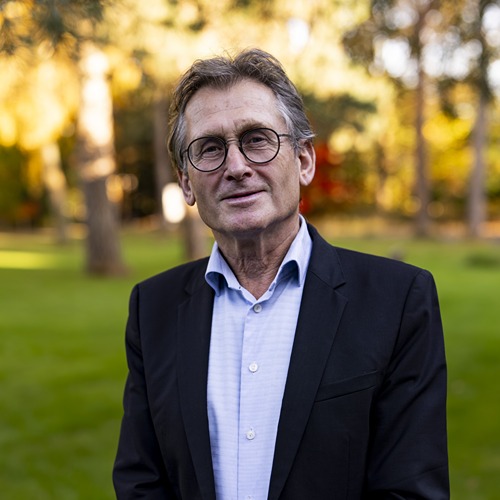
Ben L. Feringa
University of Groningen, the Netherlands
Ben L. Feringa obtained his PhD degree at the University of Groningen in the Netherlands. After working as a research scientist at Shell in the Netherlands and the UK, he was appointed lecturer and in 1988 full professor at the University of Groningen and named the Jacobus H. van 't Hoff Distinguished Professor of Molecular Sciences in 2004. He is a member of the Royal Netherlands Academy of Sciences. In 2008 he was appointed Academy Professor and he was knighted by Her Majesty the Queen of the Netherlands.
Feringa’s research has been recognized with numerous awards including the 2016 Nobel prize in Chemistry, the Tetrahedron Prize (2017) and the European Chemistry Gold Medal (2018). In 2019 he was elected as member of the European Research Council and Foreign Member of the US National Academy, USA, and in 2020 as a Foreign Member Royal Society (London) UK.
Feringa’s research interest includes stereochemistry, organic synthesis, asymmetric catalysis, molecular switches and motors, self-assembly, molecular nanosystems and photo pharmacology.
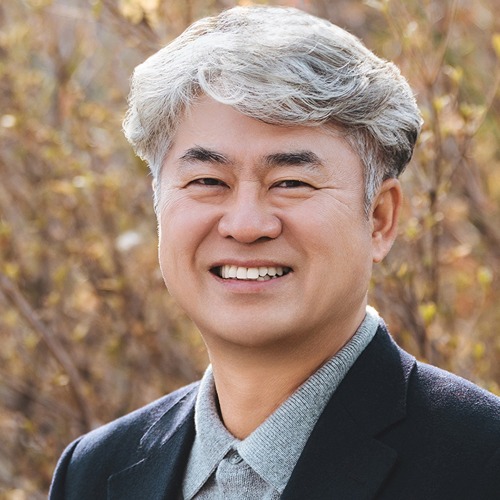
Jong Seung Kim
Korea University, Korea
Jong Seung Kim received a Ph.D. in Chemistry and Biochemistry from Texas Tech University in 1993. He worked at Jay Kochi’s lab at the University of Houston in 1994 as a post-doctoral researcher. He is currently a Distinguished Professor at Korea University, Seoul, Korea. His research interests include small-molecule-based drug delivery systems and photodynamic, photothermal, and sonodynamic therapy platforms. He has published more than 800 papers with 77,000 citations and H-index of 142 and registered about 110 intellectual patents to date. The Clarivate Analytics has consecutively named him a Highly Cited Researcher (HCR 1% Scientist) from 2014. He was elected as a member of Korea Academy of Science Technology in 2011. He received Inchon Award (2017) and Korea Science Award (2022). He also served as president of the Organic Chemistry Division of the Korean Chemical Society in 2022. He is now serving as an Executive Editor of ACS Appl. Bio Mater. and an Associate Editor of iRadiology.
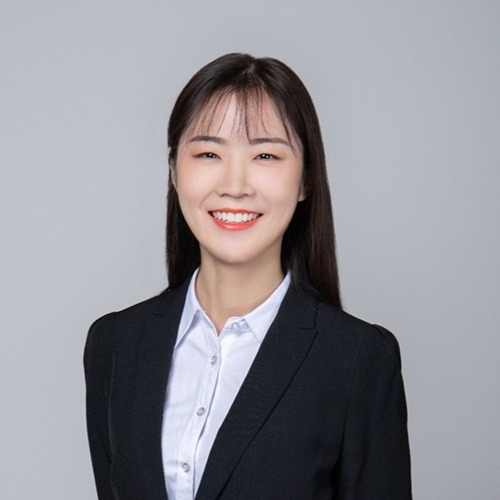
Can Liu
Renmin University of China, China
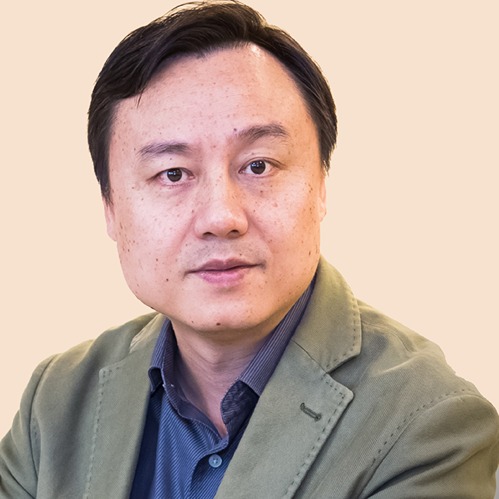
Xiaogang Liu
National University of Singapore (NUS), Singapore
Xiaogang Liu is Professor of Department of Chemistry at the National University of Singapore (NUS). He received his Ph.D. in Inorganic Chemistry from Northwestern University in 2004. Following postdoctoral training at the Massachusetts Institute of Technology (MIT), he joined NUS in 2006 and was promoted through the ranks to full professor in 2017. In addition to his primary appointment in Chemistry, he holds joint appointments in the Department of Surgery (Yong Loo Lin School of Medicine), Department of Materials Science and Engineering, the N.1 Institute for Health, iHealthtech, and the Institute of Materials Research and Engineering (A*STAR). His research bridges materials chemistry, nanophotonics, and optoelectronics, with a focus on lanthanide photonics, on-chip computational spectrometers, advanced X-ray imaging, optical neuromodulation, and adaptive flexible electronics for assistive technologies.
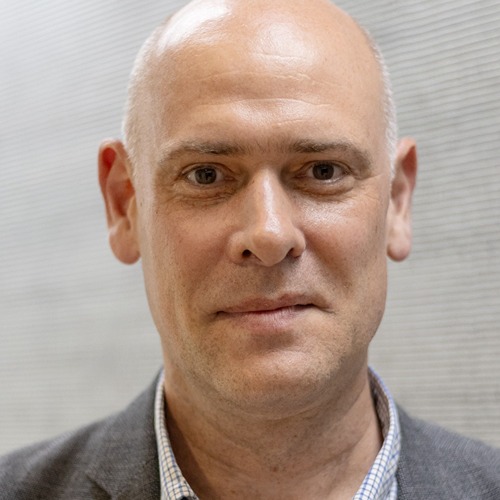
Paolo Samorì
University of Strasbourg, France
Paolo Samorì is Distinguished Professor at the University of Strasbourg and Emeritus Director of the Institut de Science et d’Ingénierie Supramoléculaires (ISIS) and Member of the Académie des technologies, Member of ACATECH, Foreign Member of the Royal Flemish Academy of Belgium for Science and the Arts (KVAB), Fellow of the Royal Society of Chemistry (FRSC), Fellow of the European Academy of Sciences (EURASC), Member of the Academia Europaea, Fellow of the Materials Research Society (MRS) and Senior Member of the Institut Universitaire de France (IUF). He published 510+ papers on nanochemistry, supramolecular sciences and materials chemistry with a specific focus on light-matter interactions in two-dimensional materials and functional organic/polymeric nanomaterials for optoelectronics, energy storage and sensing.
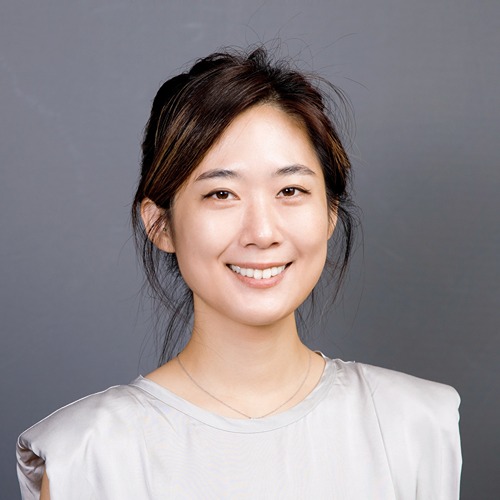
Eileen Seo
Arizona State University, USA
Prof. S. Eileen Seo is an Assistant Professor of Chemical Engineering and a Core Faculty member of the Center for Sustainable Macromolecular Materials and Manufacturing at Arizona State University. Eileen earned her B.S. in Chemical Biology at UC Berkeley in December 2011. She then pursued Ph.D. studies in Chemistry at Northwestern University under the guidance of Prof. Chad Mirkin. After completing her Ph.D. in 2018, she did postdoctoral work at UC Santa Barbara with Prof. Craig Hawker. Her research interests center on material sustainability, with a focus on dynamic adaptive materials, photochemical polymerization, nanotechnology, and additive manufacturing. Her group is supported by the Ralph E. Powe Junior Faculty Enhancement Award, DOE Early Career Award, ACS PRF DNI Grant, NSF IUCRC, NIST Training Grant, Arizona Water Innovation Initiative, Engineering for One Planet Faculty Fellowship, and National Research Foundation of Korea. She has also been recognized as a finalist for the Beckman Young Investigator Award.
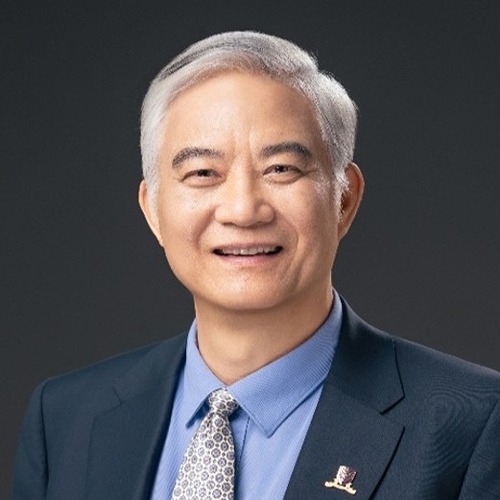
Ben Zhong Tang
Chinese University of Hong Kong, Shenzhen, China
Ben Zhong Tang received his BS and PhD degrees from South China University of Technology and Kyoto University, respectively. He conducted postdoctoral research at University of Toronto. He joined the Hong Kong University of Science and Technology in 1994 and was promoted to Chair Professor in 2008. He was elected to the Chinese Academy of Sciences in 2009, the World Academy of Sciences (TWAS) in 2020, and the American Institute for Medical and Biological Engineering (AIMBE) in 2026. In 2021, he joined the Chinese University of Hong Kong, Shenzhen, as Dean of School of Science and Engineering. Since 2026, he has been serving as Vice President of the University.
Professor Tang has published >3,000 papers, which have received >267,000 citations, with an h-index of 224 (Google Scholar, September 2026). He currently serves as Editor-in-Chief of Aggregate and PhotoAggregate (published by Wiley).
His research spans materials science, macromolecular chemistry, and biomedical theranostics. He coined the concept of aggregation-induced emission (AIE) and is recognized as a pioneer and global leader in this field.
Professor Tang has received numerous honors and awards, including Tang Aoqing Chemistry Award (2026), China–France Chemistry Lectureship Award of the French Chemical Society (2025), CCS–SINOPEC Chemistry Contribution Award (2024), Biomaterials Global Impact Award (2023), Nano Today Award (2021), National Natural Science Award (1st Class, 2017), Scientific and Technological Progress Award of the Ho Leung Ho Lee Foundation (2017), and Croucher Senior Research Fellowship (2007).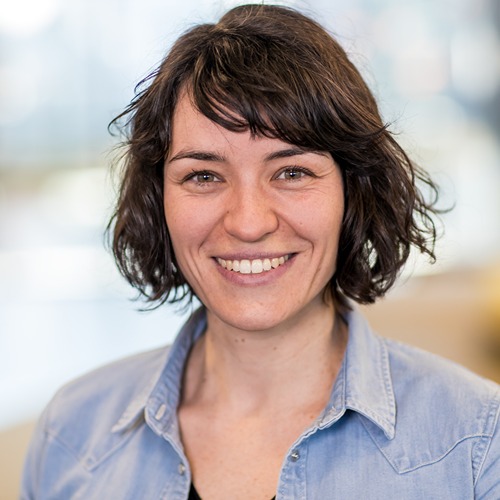
Ghislaine Vantomme
Eindhoven University of Technology, the Netherlands
Ghislaine Vantomme studied chemistry at the Ecole Normale Supérieure (Paris-Saclay, France). She received her MSc degree from Sorbonne University (Paris) in 2010 and worked with Prof. Koji Nakanishi and Prof. Nina Berova at Columbia University (New York). In 2014 she defended a PhD under the supervision of Prof. Jean-Marie Lehn (University of Strasbourg). Switching to materials chemistry, she joined Eindhoven University of Technology as a postdoctoral fellow to work with Prof. E.W. ‘Bert’ Meijer. In 2019, she was appointed Assistant Professor at TU/e and was promoted to Associate Professor in 2025. Her research interests include the understanding of the fundamentals of supramolecular chemistry and their translation into adaptive materials.
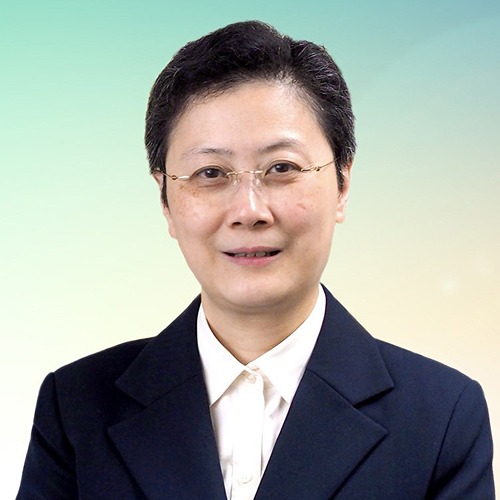
Vivian YAM
The University of Hong Kong, China
Vivian W.-W. Yam obtained both her BSc (Hons) and PhD from The University of Hong Kong, and is currently the Philip Wong Wilson Wong Professor in Chemistry and Energy and Chair Professor of Chemistry at The University of Hong Kong. She was elected to Member of Chinese Academy of Sciences, International Member (Foreign Associate) of US National Academy of Sciences, Foreign Member of Academia Europaea, Fellow of TWAS and Founding Member of Hong Kong Academy of Sciences. She was the Laureate of the 2011 L'Oréal-UNESCO For Women in Science Award. She has received a number of awards, including the Josef Michl ACS Award in Photochemistry, RSC Centenary Medal, RSC Ludwig Mond Award, Porter Medal, Bailar Medal, I-APS Presidential Award, IUPAC Distinguished Women in Chemistry/Chemical Engineering Award, FACS Foundation Lectureship Award, APA Masuhara Lectureship Award, JPA Honda-Fujishima Lectureship Award, JPA Eikohsha Award, JSCC International Award, State Natural Science Award, CCS-China Petroleum & Chemical Corporation (Sinopec) Chemistry Contribution Prize, CCS Huang Yao-Zeng Organometallic Chemistry Award, etc. She is currently the Vice-President of the Chinese Chemical Society (CCS), Chair of the CCS Women’s Chemists Committee, and President of the International Organization for Chemical Sciences in Development (IOCD). Her research interests include inorganic/organometallic chemistry, supramolecular chemistry and controlled assembly of nanostructures, photophysics and photochemistry, and metal-based molecular and nano-assembled functional materials for sensing, organic optoelectronics and energy research.
Also see: https://chemistry.hku.hk/wwyam/

Tao Zhang
Dalian Institute of Chemical Physics, Chinese Academy of Sciences, China
Prof Tao Zhang received his PhD in 1989 from Dalian Institute of Chemical Physics (DICP), Chinese Academy of Sciences (CAS). After one year postdoc in University of Birmingham, he joined DICP again where he was promoted to a full professor in 1995. He was the director of DICP (2007-2016) and the vice president of CAS (2016-2023). His research interests are mainly focused on Single-Atom Catalysis and Catalytic Conversion of Biomass. He discovered a new catalytic process from cellulose to ethylene glycol in 2008 and accomplished a pilot demonstration (1000 ton/year) in 2023. Particularlly, In 2011, he coined the new concept “Single-Atom Catalysis”, which is now one of the hot frontiers in chemistry. He has won many awards, such as Future Science Prize(2024),Tang Aoqing Award(2024),Advance of Catalysis Award of APACS(2023), ChinaNano Award (2018), National Invention Prize(2005,2006, and 2008). He has published more than 600 peer-reviewed papers and 110 patents (H-index 125 and more than 75000 citations). He serves as the Associate Editor of JACS, the Editor-in-Chief of Chinese Journal of Catalysis and Co-Chair of the Editorial Advisory Board of Chemistry – A European Journal. He is also the Editorial Board Members of Applied Catalysis B, Green Chemistry, ACS Sustainable Chemistry & Engineering, ChemPhysChem and Industrial & Engineering Chemistry Research. He was elected as academician of Chinese Academy of Sciences in 2013, fellow of TWAS in 2018, and international fellow of Canadian Engineering Academy in 2020. He is also the council member of the International Association of Catalysis Societies.