

Organized by Center for Scientific Intelligence and Innovation, University of Science and Technology of China (USTC), Nature Machine Intelligence, Nature Chemical Engineering, Nature and Nature Reviews Computing
The conference will bring together leading researchers from artificial intelligence, computing, engineering and the physical sciences around four themes: AI for Scientific Discovery; Autonomous Laboratories; Agent Design and Orchestration; and Evaluation, Benchmarking and Safety.
Register Now Submit Abstract Deadline: Nov.22, 2026 Contact Us
Event details
Speakers
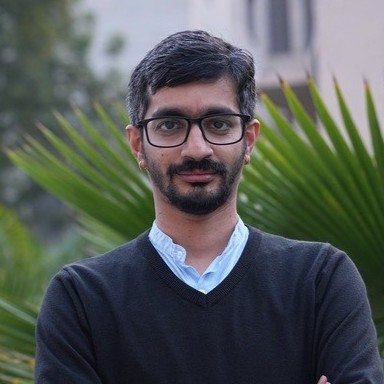
N. M. Anoop Krishnan
Indian Institute of Technology Delhi, India
Prof. N. M. Anoop Krishnan is an Associate Professor in the Department of Civil and Environmental Engineering at IIT Delhi, with a joint appointment in the Yardi School of Artificial Intelligence. He completed his Ph.D. in Civil Engineering at the Indian Institute of Science, Bangalore, followed by postdoctoral research at the University of California, Los Angeles. Anoop works at the intersection of materials, mechanics, simulation, and AI/ML, with the goal of accelerating materials modeling and discovery. His research investigates the multiscale response of disordered materials, such as glasses and cementitious materials, through an integrated, AI-driven framework spanning: (i) automated knowledge extraction using natural language processing and large language models, (ii) computational materials design via machine learning-enhanced atomistic and multiscale modeling, (iii) autonomous experimentation through self-driving laboratories, and (iv) agentic systems that connect these pillars to enable end-to-end discovery.
He has published more than 150 peer-reviewed journal papers including in reputed venues such as Nature Communications, Nature Computational Science, Nature Machine Intelligence, and A* machine learning conferences such as NeurIPS, ICML, and ICLR. His honors include the Vittorio Gottardi Award from the International Commission on Glass (2026), the W. H. Zachariasen Award from the Journal of Non-Crystalline Solids (2025), the Sir A. Pilkington Award from the Society of Glass Technology, UK (2024), the Alexander von Humboldt Fellowship for Experienced Researchers (2023), the Google Research Scholar Award (2023), the W. A. Weyl International Glass Science Award from the International Commission on Glass (2022), the INAE Young Engineer Award (2020), and the NASI Young Scientist Award (2021), among others. He serves as Associate Editor for several journals, including RSC Digital Discovery, Communications Chemistry, and the Journal of the American Ceramic Society. He is also the author of a textbook, Machine Learning for Materials Discovery, published by Springer Nature.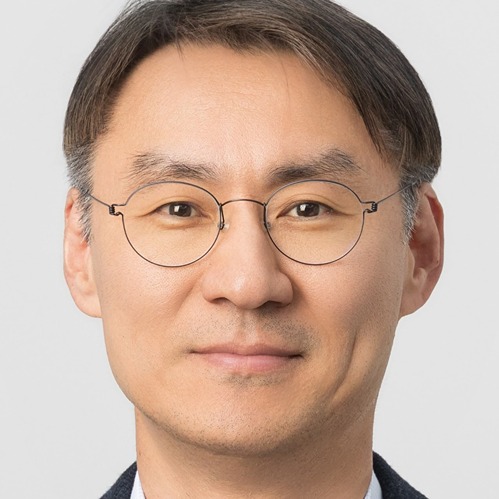
Yousung Jung
Seoul National University, Korea
Yousung Jung is a Professor of Chemical and Biological Engineering and an adjunct faculty member in the Graduate School of Artificial Intelligence at Seoul National University. He also serves as an Associate Editor of Digital Discovery, published by the Royal Society of Chemistry. He received his Ph.D. in Theoretical Chemistry from the University of California, Berkeley, under the supervision of Martin Head-Gordon. Following postdoctoral research at Caltech with Rudolph A. Marcus, he joined the faculty at KAIST in 2009 and moved to Seoul National University in 2023.
His research lies at the intersection of computational chemistry and artificial intelligence, with the goal of understanding, predicting, and designing molecules and materials with desired properties. His group develops machine-learning algorithms and advanced simulation methods for chemical and materials discovery. A major focus of his current research is the data-driven prediction of molecular and materials synthesis, including chemical reaction prediction, synthesizability assessment, inverse design, and AI-enabled autonomous discovery. His selected honors include election to the National Academy of Engineering of Korea in 2026, the Daeju AI Technology Innovation Award in 2025, the Shin Kook Joe Academic Award in 2024, the Hanseong Science Award in 2021, and the Pople Medal in 2018.
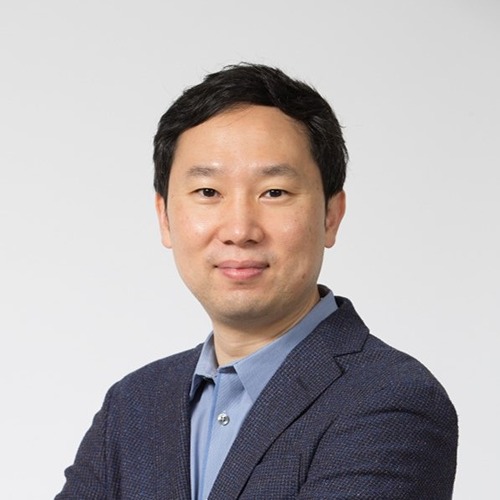
Jihan Kim
KAIST, Korea
Jihan Kim received his B.S. from UC Berkeley and his M.S. and Ph.D. degrees from University of Illinois at Urbana-Champaign, all in electrical engineering. He worked as a postdoctoral fellow in UC Berkeley/Lawrence Berkeley National Laboratory before joining KAIST in 2013. His research interests include using various methods (e.g. quantum chemical methods, classical methods, machine learning methods) to design porous materials (e.g. zeolites, metal-organic frameworks, polymers) for various energy and environmental related applications.
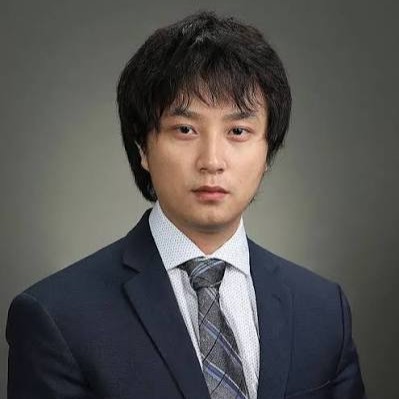
Bang Liu
University of Montreal, Canada
Ming Li
University of Waterloo, Canada
Professor Ming Li is a Fellow of the Royal Society of Canada. He has previously taught at The Ohio State University, Harvard University, York University, the University of Waterloo, and the University of California, Santa Barbara. In 2024, he received the IEEE Computer Society Wallace McDowell Award. In 2010, he was awarded the Killam Prize, Canada's national science award. He is a University Professor at the University of Waterloo, a Fellow of both the ACM and IEEE, and a recipient of the Killam Fellowship and the E.W.R. Steacie Fellowship. He is a world-renowned authority on Kolmogorov complexity. Through his research in machine learning, natural language processing, artificial intelligence applications, average-case algorithm complexity, information distance, and bioinformatics, he has resolved several long-standing problems that remained unsolved for decades.
Yanyan Lan
Tsinghua University, China
Shirui Pan
Griffith University, Australia
Chenru Duan
Deep Principle Inc., USA
Chenru Duan is founder and CTO of Deep Principle, a startup building AI scientists for chemical and materials discovery. Deep Principle combines first-principles calculations, AI models, and automated labs to address bottlenecks in materials discovery, property prediction, and formulation optimization, with a flagship AI Scientist platform recently extended into an agentic system called Agent Mira that unifies modules for generation, precision computation, screening, synthesis routing, and high-throughput experiments. Deep Principle is World Economic Forum (WEF) Tech Pioneer is recognized by the MINDS program by WEF in 2025 and SAILS Star prize by WAIC in 2026.
Chenru received his B.S. from the Department of Physics at Zhejiang University in 2017 and joined the Kulik group at MIT, completing his Ph.D. in chemistry in July 2022, where his work integrated machine learning into quantum chemistry workflows. He then joined Microsoft as a research scientist, working in Azure Quantum before co-founding Deep Principle with Haojun Jia. His PhD advisor, Heather Kulik, soon joined Deep Principle part time as Chief Scientist. He is also a core organizer of the AI4Science workshop series at ICML, NeurIPS, ACS, and MRS. His honors include the ACS Chemical Computing Group Excellence Award, an MRS Gold Award, and Forbes 30 under 30 in China.
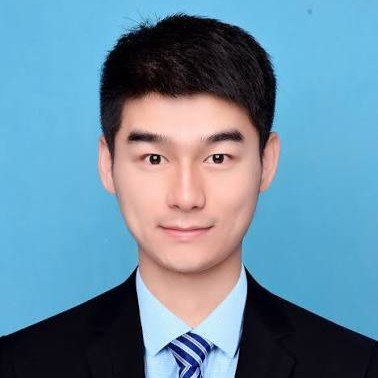
Lei BAI
Shanghai Artificial Intelligence Laboratory, China
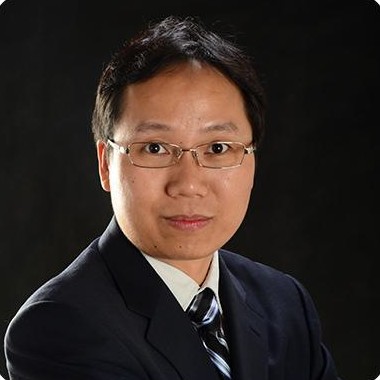
Haibo Chen
Shanghai Jiao Tong University, China