

Organized by Center for Scientific Intelligence and Innovation, University of Science and Technology of China (USTC), Nature Machine Intelligence, Nature Chemical Engineering, Nature and Nature Reviews Computing
The conference will bring together leading researchers from artificial intelligence, computing, engineering and the physical sciences around four themes: AI for Scientific Discovery; Autonomous Laboratories; Agent Design and Orchestration; and Evaluation, Benchmarking and Safety.
Register Now Submit Abstract Deadline: Nov.22, 2026 Contact Us
Event details
Speakers
Sungsoo Ahn
KAIST, Korea
Varinia Bernales
University of Toronto, Canada
Tonio Buonassisi
Massachusetts Institute of Technology, USA
Prof. Tonio Buonassisi works at the intersection of machine learning (ML), automation, and materials science to speed up the discovery and deployment of technologies with broad societal impact. His early work in solar energy and technoeconomic analysis supported dozens of companies and earned him the Presidential Early Career Award for Scientists and Engineers (PECASE). From 2018 to 2021, he served as founding director of the Accelerated Materials Development for Manufacturing (AMDM) program in Singapore, a S$24.7M initiative that demonstrated more than a 10× acceleration in materials development by integrating ML, automation, and simulation. Returning to MIT, he led the Accelerated Materials Laboratory for Sustainability and the ADDEPT Center (2023–2025), a U.S. Department of Energy-funded effort that unites academic and industry partners to develop more durable, efficient, and reproducible perovskite-based tandem photovoltaic modules. Since 2026, he leads CSEM’s Sustainable Energy team, working on “full-stack” materials-to-products innovation in Neuchâtel, Switzerland on batteries, photovoltaics, grid integration, and sustainable materials.

Noelia Ferruz
Centre for Genomic Regulation, Spain
Noelia Ferruz is a chemist leading the AI for Protein Design group at the Centre for Genomic Regulation (CRG) in Barcelona. Her research combines generative AI, explainable models, and lab validation to create functional proteins for medicine, sustainability, and biotechnology. She studied Chemistry at the University of Zaragoza, later completing her MSc and PhD in Bioinformatics at Pompeu Fabra University, with further training at the University of Cambridge, Pfizer, and the University of Bayreuth. In 2024, she received a €1.5M ERC Starting Grant for ATHENA, a transparent AI platform for protein design. She has earned several distinctions, including being a finalist at the Prize Princess of Girona, a ‘Leonardo Creators’ Award, and won the L’Oréal-UNESCO 2023 Award.
Gabe Gomes
Carnegie Mellon University, USA
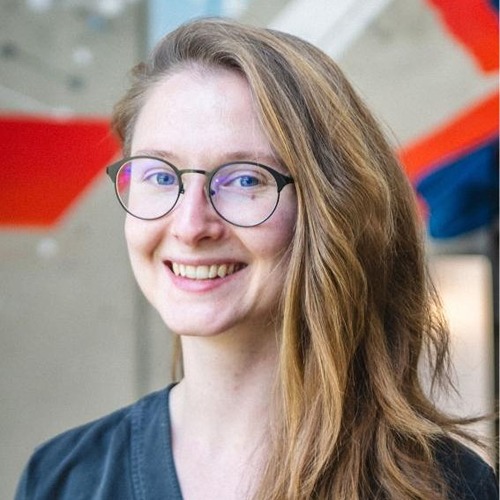
Michaela Hinks
Edison Scientific, Inc., USA
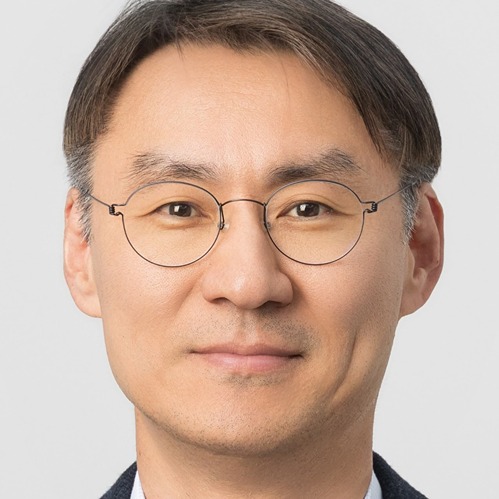
Yousung Jung
Seoul National University, Korea
Yousung Jung is a Professor of Chemical and Biological Engineering and an adjunct faculty member in the Graduate School of Artificial Intelligence at Seoul National University. He also serves as an Associate Editor of Digital Discovery, published by the Royal Society of Chemistry. He received his Ph.D. in Theoretical Chemistry from the University of California, Berkeley, under the supervision of Martin Head-Gordon. Following postdoctoral research at Caltech with Rudolph A. Marcus, he joined the faculty at KAIST in 2009 and moved to Seoul National University in 2023.
His research lies at the intersection of computational chemistry and artificial intelligence, with the goal of understanding, predicting, and designing molecules and materials with desired properties. His group develops machine-learning algorithms and advanced simulation methods for chemical and materials discovery. A major focus of his current research is the data-driven prediction of molecular and materials synthesis, including chemical reaction prediction, synthesizability assessment, inverse design, and AI-enabled autonomous discovery. His selected honors include election to the National Academy of Engineering of Korea in 2026, the Daeju AI Technology Innovation Award in 2025, the Shin Kook Joe Academic Award in 2024, the Hanseong Science Award in 2021, and the Pople Medal in 2018.
Atoosa Kasirzadeh
Carnegie Mellon University, USA
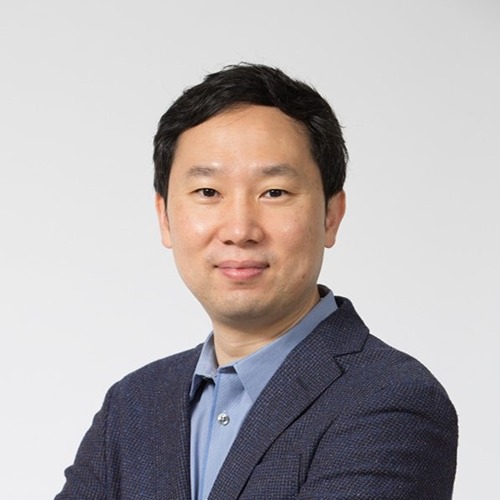
Jihan Kim
KAIST, Korea
Jihan Kim is a professor in the Department of Chemical and Biomolecular Engineering at KAIST. He received his PhD from the University of Illinois at Urbana-Champaign and was a postdoctoral researcher with Prof. Berend Smit at UC Berkeley and Lawrence Berkeley National Laboratory before joining KAIST. His group works on computational design of porous materials, particularly metal-organic frameworks, combining large-scale molecular simulation, machine learning interatomic potentials, and generative models for new framework structures.
His recent work focuses on agentic AI for scientific discovery, where large language model agents autonomously plan, execute, and interpret their own materials simulation campaigns. His lab studies both the infrastructure that allows many such agents to run in parallel over long horizons and the scientific behavior of the agents themselves, including how they choose research directions, how they report results, and how their conclusions converge or diverge when given the same open-ended goal.
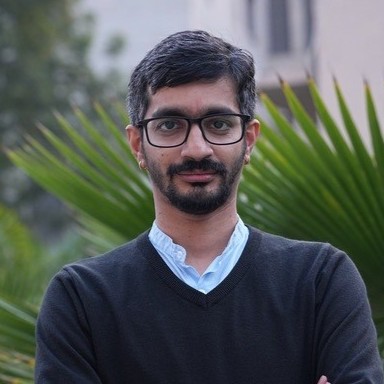
N. M. Anoop Krishnan
Indian Institute of Technology Delhi, India
Prof. N. M. Anoop Krishnan is an Associate Professor in the Department of Civil and Environmental Engineering at IIT Delhi, with a joint appointment in the Yardi School of Artificial Intelligence. He completed his Ph.D. in Civil Engineering at the Indian Institute of Science, Bangalore, followed by postdoctoral research at the University of California, Los Angeles. Anoop works at the intersection of materials, mechanics, simulation, and AI/ML, with the goal of accelerating materials modeling and discovery. His research investigates the multiscale response of disordered materials, such as glasses and cementitious materials, through an integrated, AI-driven framework spanning: (i) automated knowledge extraction using natural language processing and large language models, (ii) computational materials design via machine learning-enhanced atomistic and multiscale modeling, (iii) autonomous experimentation through self-driving laboratories, and (iv) agentic systems that connect these pillars to enable end-to-end discovery.
He has published more than 150 peer-reviewed journal papers including in reputed venues such as Nature Communications, Nature Computational Science, Nature Machine Intelligence, and A* machine learning conferences such as NeurIPS, ICML, and ICLR. His honors include the Vittorio Gottardi Award from the International Commission on Glass (2026), the W. H. Zachariasen Award from the Journal of Non-Crystalline Solids (2025), the Sir A. Pilkington Award from the Society of Glass Technology, UK (2024), the Alexander von Humboldt Fellowship for Experienced Researchers (2023), the Google Research Scholar Award (2023), the W. A. Weyl International Glass Science Award from the International Commission on Glass (2022), the INAE Young Engineer Award (2020), and the NASI Young Scientist Award (2021), among others. He serves as Associate Editor for several journals, including RSC Digital Discovery, Communications Chemistry, and the Journal of the American Ceramic Society. He is also the author of a textbook, Machine Learning for Materials Discovery, published by Springer Nature.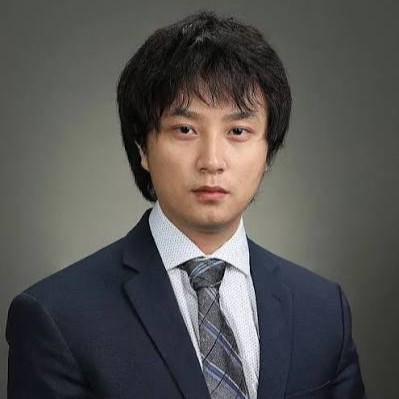
Bang Liu
University of Montreal, Canada
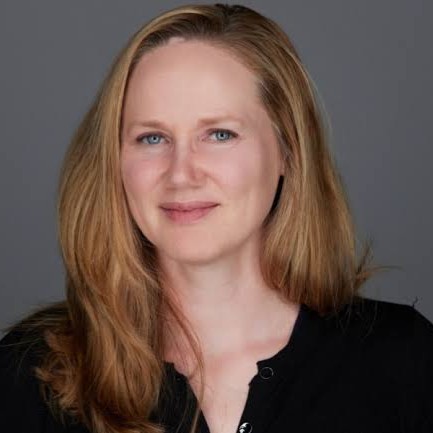
Annalisa Pawlosky
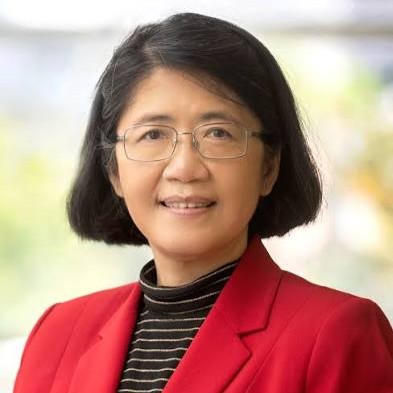
May Dongmei Wang
Georgia Institute of Technology and Emory University, USA