
Scientific Committee
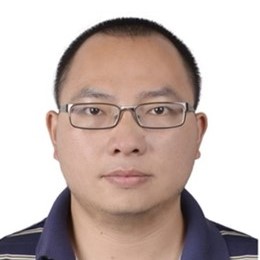 Jun Jiang
University of Science and Technology of China  |
 Yao Fu
University of Science and Technology of China  |
 Yi Luo
University of Science and Technology of China  |
 Jinlong Yang
Tongji University  |
 Mirko Pieropan
Nature Machine Intelligence  |
 Liesbeth Venema
Nature Machine Intelligence
 |
 Alessio Lavino
Nature Chemical Engineering
 |
 George Caputa
Nature
 |
 Laura Schmid
Nature Reviews Computing  |
Organizer

The Center for Scientific Intelligence and Innovation, initiated by the Hefei Municipal Government and jointly supported by Anhui Province and the Chinese Academy of Sciences, is operated by the University of Science and Technology of China. The Center is building next-generation AI-enabled research infrastructure and autonomous laboratories for chemistry, materials science, biomanufacturing, medicine, energy, and environmental science. Its facilities include more than 3,000 square metres of AI-driven robotic laboratory space, with 81 thematic automated platforms, 110 research robots, and over 200 intelligent experimental workstations. The Center has developed the Robotic AI-Scientist 2.0 operating system and the Lingjing multi-agent research engine, which integrate literature analysis, theoretical modelling, experimental design, automated computation, robotic experimentation, and iterative optimisation into end-to-end closed-loop discovery workflows. It also leads an AI-Scientist ecosystem alliance that brings together 120 universities, research institutes, and industry partners, supporting collaboration across academia and industry. By combining advanced infrastructure, interdisciplinary expertise, and a strong pathway from fundamental discovery to translational application, the Center offers a distinctive platform for international scientific exchange and collaboration.

The University of Science and Technology of China (USTC) is a prominent university in China and enjoys an excellent reputation worldwide. It was established by the Chinese Academy of Sciences (CAS) in 1958 in Beijing, as a strategic action by the Chinese government, to meet China’s science and technology needs and increases the country’s international competitiveness. CAS integrated its resources with USTC, with the aim of educating top talent in cutting-edge, interdisciplinary science and technology. In 1970, USTC moved to its current location in Hefei, the capital of Anhui Province.

Publishing online monthly from January 2019, Nature Machine Intelligence is interested in the best research from across the fields of artificial intelligence, machine learning and robotics.
Nature Machine Intelligence publishes high-quality original research and reviews in a wide range of topics in machine learning, robotics and AI. We also explore and discuss the significant impact that these fields have on other scientific disciplines as well as many aspects of society and industry. There are countless opportunities where machine intelligence can enhance human capabilities and knowledge in fields such as scientific discovery, healthcare, medical diagnostics and safe and sustainable cities, transport and agriculture. At the same time, many important questions on ethical, social and legal issues arise, especially given the fast pace of developments. Nature Machine Intelligence provides a platform to discuss these wide implications — encouraging a cross-disciplinary dialogue — with Comments, News Features, News & Views articles and also Correspondence.

Nature Chemical Engineering is a new monthly online journal, debuting in January 2024, dedicated to publishing the most significant original research, commentary and analysis of direct relevance to the diverse community of chemical engineers in both academia and industry.
Nature Chemical Engineering is a new monthly online journal dedicated to publishing the most significant original research, commentary and analysis of direct relevance to the diverse community of chemical engineers. The journal will highlight all facets of chemical engineering: from fundamental scientific advances in chemical, physical and biological systems to the design, scale-up and optimization of chemical processes of importance to society.

Nature is a weekly international journal publishing the finest peer-reviewed research in all fields of science and technology on the basis of its originality, importance, interdisciplinary interest, timeliness, accessibility, elegance and surprising conclusions. Nature also provides rapid, authoritative, insightful and arresting news and interpretation of topical and coming trends affecting science, scientists and the wider public.

Nature Reviews Computing is an online monthly journal launching in January 2027.
Nature Reviews Computing will publish commissioned high-impact Review, Perspective and Comment articles spanning foundational, interdisciplinary and specialized topics, as well as the intersections of computing and society to showcase the global role of computer science. The journal aims to be a high-impact venue providing reliable clarity on the current foundations of computer science, bridging gaps between areas by highlighting synergies, and fostering new lines of thinking across disciplines. It should serve as an accessible, inclusive, long-term resource for researchers at all career stages that sets standards, stimulates dialogue, and offers a wide perspective for the future of the field.