

Organized by Ji Hua Laboratory, Nature Materials and Nature Electronics.
The Nature Forum on advancing light emitting device for integrated intelligence will discuss the latest research progress in the fields of light emitting materials, devices and their intelligent integration. It will bring together world-wide experts to discuss the opportunities and challenges towards next generation display technologies as part of the solutions to foster an intelligent future.
Register Now Submit Abstract Deadline: Oct.8, 2026 Contact Us
Event details
Speakers
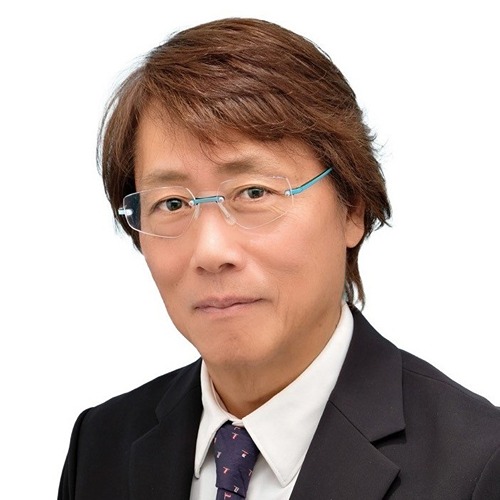
Chihaya Adachi
Kyushu University, Japan
Prof. Chihaya Adachi obtained his doctorate in Materials Science and Technology in 1991 from Kyushu University. He held positions as a research chemist and physicist in the Chemical Products R&D Center at Ricoh Co., a research associate at Shinshu University, a research staff at Princeton University, and an associate professor and professor at Chitose Institute of Science and Technology. In 2005, he returned to Kyushu University as a professor and was promoted to a distinguished professor in 2010, and his current posts also include director of Kyushu University’s Center for Organic Photonics and Electronics Research (OPERA) since 2010 and director of the Fukuoka i3 Center for Organic Photonics and Electronics Research since 2013. His research has been concentrated on organic synthesis, device fabrication, and optical and electrical device characterization of organic semiconductors. He has been serving as an editor of “Organic Electronics” (Elsevier) (2007-2019) and CCS Chemistry (2019-). His publications include over 780 research papers. He was selected as a highly cited researcher (Clarivate) (2018-2025).

Stephen Forrest
University of Michigan, USA
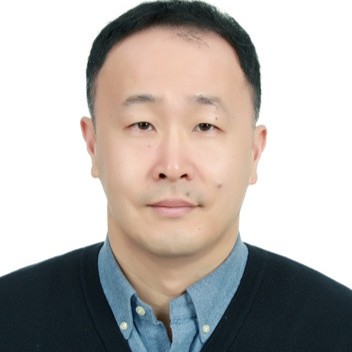
Sanghyeon Kim
Korea Advanced Institute of Science and Technology (KAIST), Korea
Prof./Dr. SangHyeon Kim is currently an Associate Professor in Electrical Engineering department of to Korea Advanced Institute of Science and Technology (KAIST), Korea. He received his B.S., M.S., and Ph.D. degrees in electronic engineering from The University of Tokyo, Japan, in 2009, 2011, and 2014, respectively. After his Ph.D., he was with Korea Institute of Science and Technology (KIST) in 2014 until he moved to KAIST in 2019. Before joining KAIST, he was also a post-doc R&D specialist at imec, Belgium from 2017 to 2018. His current research interests include various semiconductor devices for Next-generation computing/communication, RF/Power analog applications, and displays, etc., with a focus on monolithic 3D integration.
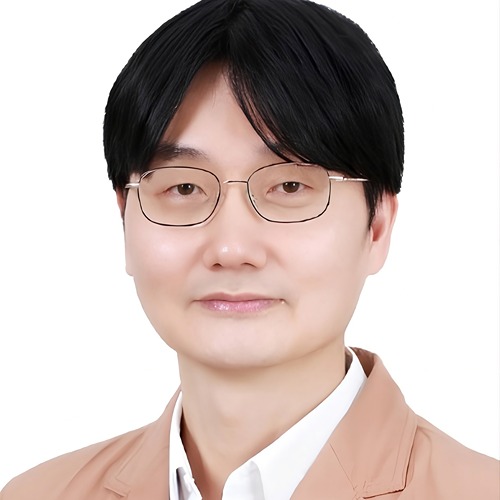
Tae-Woo Lee
Seoul National University, Korea
Tae-Woo Lee is a Professor in the Department of Materials Science and Engineering at Seoul National University, Republic of Korea, and the Founder and CEO of SN Display Co., Ltd. He received his Ph.D. in Chemical Engineering from the Korea Advanced Institute of Science and Technology (KAIST) in 2002. He subsequently joined Bell Laboratories, Lucent Technologies, USA, as a postdoctoral researcher and worked as a research staff member at the Samsung Advanced Institute of Technology from 2003 to 2008. Before joining Seoul National University in 2016, he served as an Assistant and Associate Professor at Pohang University of Science and Technology (POSTECH).
His research encompasses organic semiconductors, metal halide perovskites, and carbon-based materials for optoelectronic and bioelectronic applications. He has made pioneering contributions to perovskite light-emitting diodes and nanocrystals, advancing their efficiency, brightness, operational stability, and scalable processing for next-generation displays. His research also spans organic light-emitting diodes, flexible and stretchable electronics, printed electronics, and bioinspired neuromorphic devices, including artificial sensory nerves and biointegrated systems. To translate these advances into commercial technologies, he founded SN Display in 2020, focusing on perovskite materials and display applications. The company received a CES 2026 Innovation Award.
His honors include the Merck Award (2006), the Korea Young Scientist Award (Presidential Award, 2008), the Scientist of the Month Award (2013), the Research Innovation Award from the Ministry of Science and ICT (2018), the Korea Engineering Award (Presidential Award, 2021), a Ministerial Commendation from the Ministry of Trade, Industry and Energy (2021), and the Kyung-Ahm Prize (2023). He was elected a Fellow of the Materials Research Society (MRS) in 2020, the Korean Academy of Science and Technology (KAST) in 2021, and SPIE in 2024. He was named a Clarivate Highly Cited Researcher in 2019 and annually from 2021 to 2026.
He has published 346 papers in leading journals, including Science, Nature, Nature Photonics, Nature Nanotechnology, Nature Reviews Materials, Nature Biomedical Engineering, Science Advances, Nature Communications, Joule, PNAS, Energy & Environmental Science, and Advanced Materials, and is an inventor or co-inventor on 471 patents. He serves on the editorial boards of Advanced Materials, FlatChem, EcoMat, Chem & Bio Engineering, Materials Today Electronics, Nano Convergence, and Semiconductor Science and Technology, and holds associate and executive editorial roles with Organic Electronics and The Innovation Materials. He also served as a Chair of the 2023 MRS Spring Meeting.
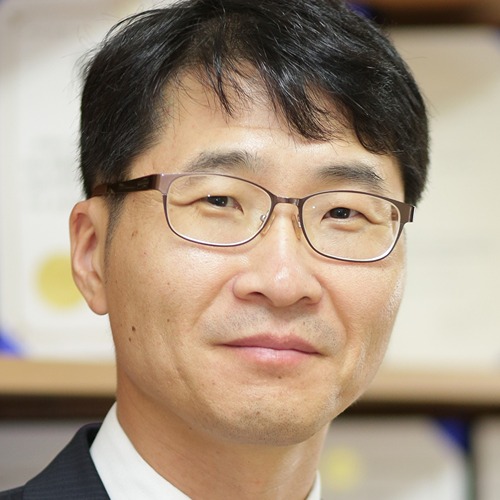
Jun Yeob Lee
Sungkyunkwan University, Korea
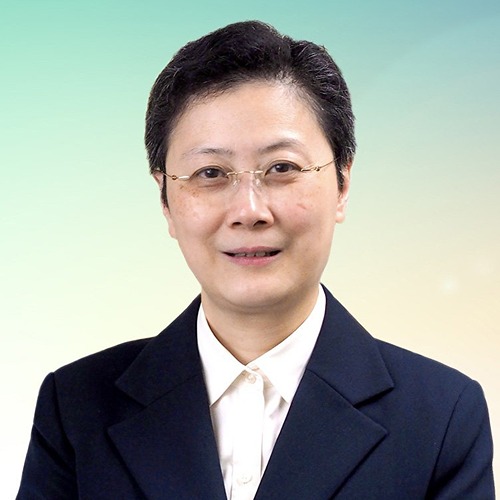
Vivian YAM
The University of Hong Kong, China
Vivian W.-W. Yam obtained both her BSc (Hons) and PhD from The University of Hong Kong, and is currently the Philip Wong Wilson Wong Professor in Chemistry and Energy and Chair Professor of Chemistry at The University of Hong Kong. She was elected to Member of Chinese Academy of Sciences, International Member (Foreign Associate) of US National Academy of Sciences, Foreign Member of Academia Europaea, Fellow of TWAS and Founding Member of Hong Kong Academy of Sciences. She was the Laureate of the 2011 L'Oréal-UNESCO For Women in Science Award. She has received a number of awards, including the Josef Michl ACS Award in Photochemistry, RSC Centenary Medal, RSC Ludwig Mond Award, Porter Medal, Bailar Medal, I-APS Presidential Award, IUPAC Distinguished Women in Chemistry/Chemical Engineering Award, FACS Foundation Lectureship Award, APA Masuhara Lectureship Award, JPA Honda-Fujishima Lectureship Award, JPA Eikohsha Award, JSCC International Award, State Natural Science Award, CCS-China Petroleum & Chemical Corporation (Sinopec) Chemistry Contribution Prize, CCS Huang Yao-Zeng Organometallic Chemistry Award, etc. She is currently the Vice-President of the Chinese Chemical Society (CCS), Chair of the CCS Women’s Chemists Committee, and President of the International Organization for Chemical Sciences in Development (IOCD). Her research interests include inorganic/organometallic chemistry, supramolecular chemistry and controlled assembly of nanostructures, photophysics and photochemistry, and metal-based molecular and nano-assembled functional materials for sensing, organic optoelectronics and energy research.
Also see: https://chemistry.hku.hk/wwyam/
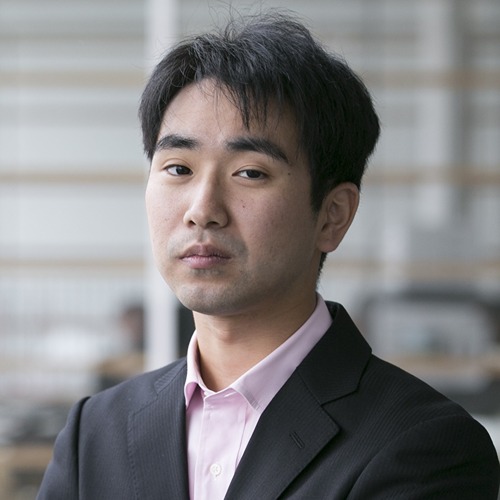
Tomoyuki Yokota
The University of Tokyo, Japan
Tomoyuki Yokota is Associate Professor of the School of Engineering at The University of Tokyo, Japan. He received his degree (Doctor of Engineering) in 2013 from the Department of Applied Physics, Graduate School of Engineering, The University of Tokyo. He spent Project Research Associate periods at the University of Tokyo (2013-16). In 2016, he joined the Faculty of Engineering, The University of Tokyo as a Senior Lecturer. In 2019, he was promoted to an Associate Professor.
His current research interests include organic photonic devices, flexible electronics, printed electronics, large-area sensors, and wearable electronics. He published more than 100 papers in ISI journals, including Nature Nanotechnology, Nature Electronics, Advanced Materials, and Science Advances. His honors include the Award for The 3rd Japan Open Innovation Prize from Minister of State for Science and Technology Policy Award (2021), the Young Scientists' Prize for the Commendation for Science and Technology by MEXT, Japan (2021), and Marubun Academic Award from Marubun Research
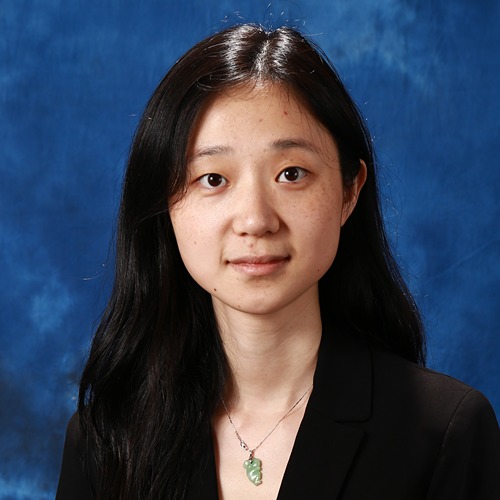
Ni Zhao
The Chinese University of Hong Kong, China
Dr. Ni Zhao received her Ph.D. in Physics from the University of Cambridge in 2008 and subsequently conducted postdoctoral research at the Massachusetts Institute of Technology from 2008 to 2010, where she worked on quantum-dot-based optoelectronic devices. She is currently Professor and Chair of the Department of Electronic Engineering at The Chinese University of Hong Kong. Her research focuses on optoelectronic devices, heterogenous integration and wearable sensing technologies.
Dr. Zhao has published over 200 journal articles and holds an h-index of 82. She was named a Highly Cited Researcher by Clarivate Analytics in 2018 and 2025. She is a Fellow of the Royal Society of Chemistry and an Associate Editor of Science Advances.