

Sponsors
We Gratefully Acknowledge Our Princeton Sponsors
Keynote Speakers
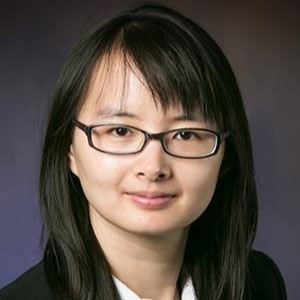
Qian Chen
University of Illinois at Urbana-Champaign, USA
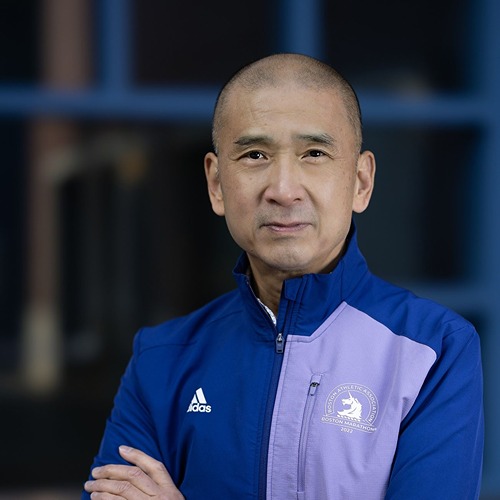
Yifan Cheng
University of California San Francisco and Howard Hughes Medical Institute, USA
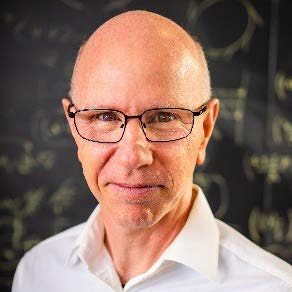
Amir Yacoby
Harvard University, USA
Speakers
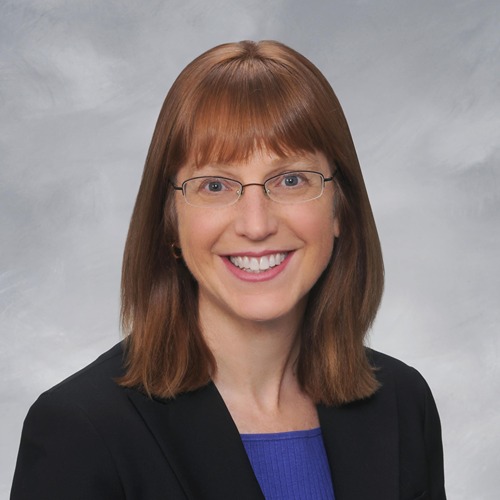
Karen Bustillo
Lawrence Berkeley National Laboratory, USA
Karen Bustillo is a staff member at the National Center for Electron Microscopy (NCEM), Molecular Foundry, Lawrence Berkeley National Laboratory in Berkeley, California. At NCEM, Karen collaborates with scientists worldwide through the U. S. Department of Energy Molecular Foundry User Program to characterize materials with transmission electron microscopy. Dr. Bustillo’s research interests include developing advanced TEM techniques for imaging electron beam-sensitive materials such as polymers, organic small molecules, framework materials, and battery materials. She also has expertise in situ experiments including cryo, heating, mechanical testing, liquid cell, and gas cell. She pursues characterization of nanostructures using the spectroscopy capabilities of the TEM especially with respect to elemental quantification and data analysis.
Peter Crozier
Arizona State University, USA
Peter A. Crozier is a Professor of Materials in the School for Engineering of Matter, Transport and Energy at Arizona State University. He has extensive experience in characterizing ceramics, metal nanoparticles and catalytic materials for applications related to energy and the environment. He has expertize in developing and applying advanced techniques of transmission electron microscopy, including in situ and operando methods to problems in ion conductors and catalytic materials. He is also applying electron energy-loss spectroscopy to determine the optical and vibrational properties of nanomaterials. Over the last 5 years, he has explored the effectiveness of various deep learning models for removing noise in electron images, spectra and diffraction patterns. He is a Fellow of the Microscopy Society of America and also a member of the Materials Research Society, the North American Catalysis Society and the American Ceramics Society. He served as the President of the Microscopy Society of America. He has organized numerous workshops, schools and symposia and has published over 200 archival journal papers and book articles.
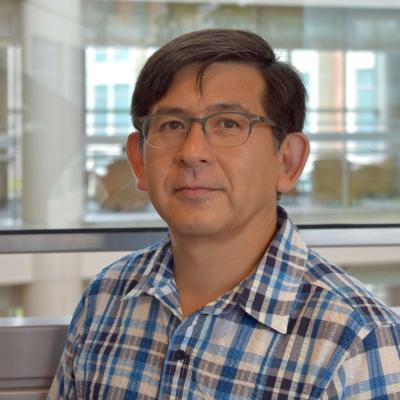
Adrian Ferré-D’Amaré
National Institutes of Health, USA
Franz Giessibl
University of Regensburg, Germany
Franz J. Giessibl holds the chair for quantum nanoscience at the University of Regensburg in Germany and is a research professor at Kanazawa University in Japan. He is a pioneer in atomic force microscopy (AFM) who started as the PhD student of Nobel Laureate Gerd Binnig at the IBM Physics Group Munich at LMU in 1988. In his PhD thesis, he built the first AFM for low temperatures and ultrahigh vacuum (UHV) together with Gerd Binnig and Christoph Gerber and obtained true atomic resolution on an ionic crystal. After that, he joined an AFM manufacturer in Silicon Valley, designed and built a UHV AFM and launched the field of atomically resolving noncontact AFM by demonstrating true atomic resolution on the 7x7 reconstruction of silicon for the first time. In 1995, he joined McKinsey as a management consultant and invented the qPlus sensor, a novel core for the AFM, in his home laboratory on weekends. He joined Augsburg University in 1997 where he obtained his habilitation in 2001. An extended version of his habilitation thesis was published in Reviews of Modern Physics in 2003 with currently more than 3500 citations – it is generally considered one of the foundational review papers in AFM.
In 2005, he received offers for chairs at the University of Bristol and University of Regensburg, joining the latter in 2006. Since then, he did key AFM experiments from atomic manipulation, subatomic spatial resolution, artificial atoms, topological insulators and others. Important results were also obtained in collaborations with the IBM labs in Almaden and Zurich, NIST in Gaithersburg, the National University of Singapore, Kanazawa University and others. His main invention, the qPlus sensor, is standard today for low temperature AFMs, it is used by seven international AFM manufacturers and operates in more than 500 low temperature AFMs globally today. In 2026, the AFM market leader launched an AFM that uses the qPlus sensor in ambient conditions.
Franz J. Giessibl is a Fellow of the American Physical Society, the European Academy for Sciences and Arts in Salzburg, the European Academy of Sciences in Brussels, the Japanese Vacuum- and Surface Science Society and a distinguished Fellow of the International Engineering and Technology Institute. He has won several international science prizes, including the Feynman Prize on Nanoscience, the Heinrich Rohrer Grand Medal, the NIMS Award, the APS Keithley Prize and the MRS Innovation in Materials Characterization Award.
He also worked with an eminent visual artist as published in his 2022 book “First View Inside an Atom. Encounters with Gerhard Richter between Art and Science”. In 2026, his new book “Atomic Force Microscopy and Atomic Manipulation. An Inquiry into Matter” will appear with Springer Nature.
Drew Higgins
McMaster University, Canada
John Jimah
Princeton University, USA
Aaron Kuan
Yale University, USA
Aaron Kuan investigates how circuit connectivity within and between brain areas supports a diverse array of functions. His lab aims to apply circuit-mapping techniques at brain-wide scales to understand how brain wiring underlies cognition and neurological diseases. Kuan develops new electron microscopy and X-ray imaging techniques to enable 3D imaging of neuronal circuits with unprecedented resolution and scale and combines these approaches with behavior and functional imaging to reveal how circuit connectivity underlies brain activity and, ultimately, cognition. The long-term research goal is to extend high-resolution circuit mapping techniques to brain-wide scales to unite "top-down" and "bottom-up" views of brain anatomy and function.
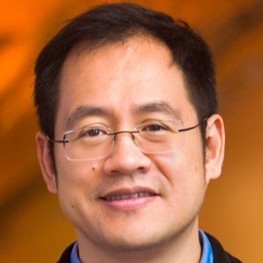
Ju Li
Massachusetts Institute of Technology, USA
Ju was elected Fellow of the American Physical Society in 2014, a Fellow of the Materials Research Society in 2017 and a Fellow of AAAS in 2020. Li is the chief organizer of MIT A+B Applied Energy Symposia that aim to develop solutions to global climate change challenges with “A-Action before 2040” and “B-Beyond 2040” technologies. ( https://www.youtube.com/@mitab3889/videos).
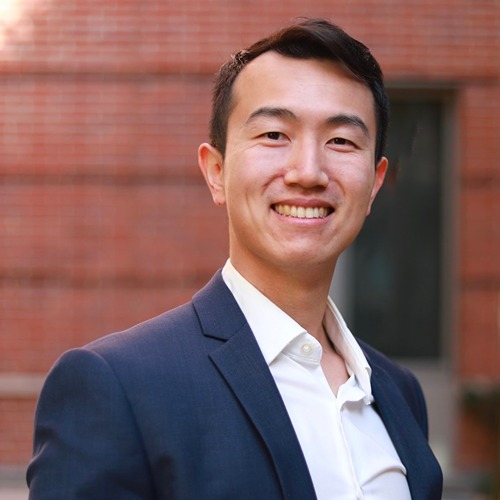
Yuzhang Li
University of California, Los Angeles, USA
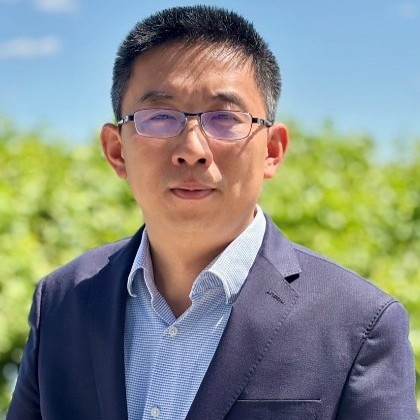
Zhao Liu
Thermo Fisher Scientific, USA
Zhao Liu is a Senior Market Development Manager at Thermo Fisher Scientific, based in Oregon, USA, specializing in the battery market. He earned his PhD in Materials Science and Engineering from Northwestern University and later joined Thermo Fisher Scientific. He also serves as an Affiliated Professor in the Materials Science & Engineering Department at the University of Washington, helping strengthen academia–industry collaboration. His work focuses on advancing battery characterization metrology across R&D and manufacturing, addressing analytical challenges, and driving practical solutions through strategic partnerships with academic and industrial stakeholders.
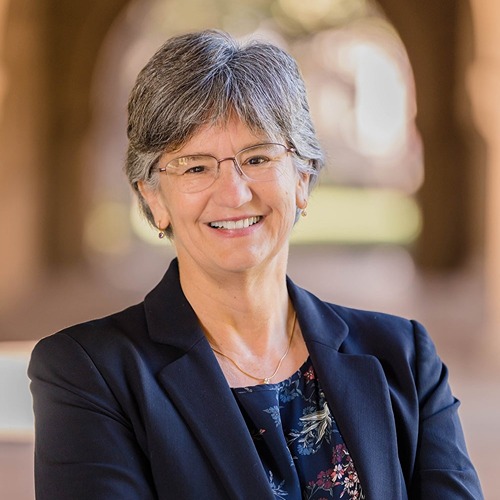
Kathryn Ann Moler
Stanford University, USA
Kathryn A. “Kam” Moler is the Marvin Chodorow Professor at Stanford University, where she previously served as Vice Provost and Dean of Research from 2018 to 2023 and currently serves as Vice President for SLAC. A physicist with both a B.S. and Ph.D. from Stanford, her work has been recognized by her election to the National Academy of Sciences and as a Fellow of the American Physical Society. Her other notable honors include the Presidential Early Career Award for Scientists and Engineers (PECASE) and the William L. McMillan Award for outstanding contributions in condensed matter physics.
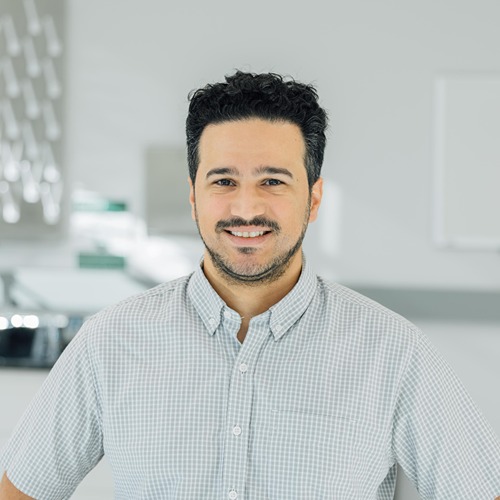
Reza Paraan
Biohub, USA
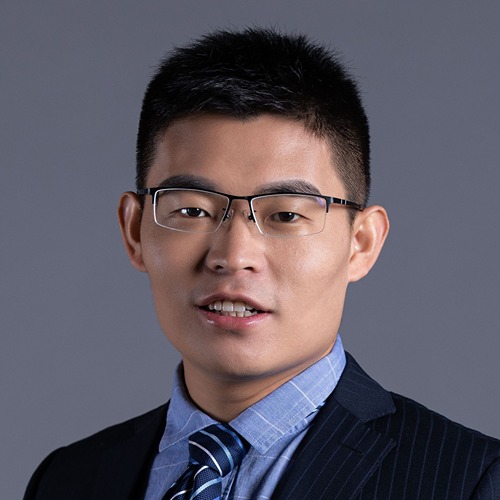
Huaizong Shen
Shenzhen Medical Academy of Research and Translation (SMART), China
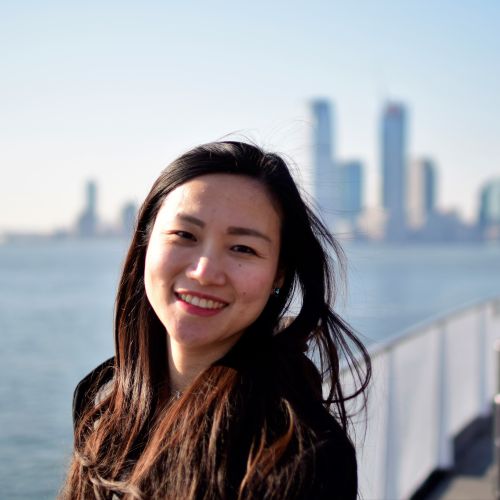
Wenfei Song
Thermo Fisher Scientific, Netherlands
Wenfei Song is a Product Specialist at Thermo Fisher Scientific in Eindhoven, the Netherlands, specializing in cryo-electron microscopy (cryo-EM), with a strong focus on single-particle analysis (SPA). She leads SPA-related application work and has experience across the full workflow, from sample preparation and screening to data collection, image processing, and high-resolution structure determination.
Her work also includes integrated structural biology, combining cryo-EM with mass spectrometry to better understand sample quality, protein behavior, and structure. She also has strong experience in cryo-electron tomography (cryo-ET), with hands-on experience across the full workflow from sample preparation and data collection to tomographic reconstruction and structural analysis.
Ellen Zhong
Princeton University, USA