Event details
REGISTER BY SEPTEMBER 21, 2026
REGISTER TODAYAdvances in electron microscopy instrumentation and methods continue to drive progress in the physical and life sciences. The 4th edition of this conference will bring together researchers from physical and life sciences working at the frontiers of electron microscopy, tomography, artificial intelligence, and scanning probe microscopy.
- Enjoy engaging presentations from select international scientists and explore scientific questions outside of your comfort zone.
- Emphasis on identifying and addressing new challenges, promoting synergies and developing the next generation of instruments and tools.
- Interactive panel discussions on scientific publishing with Nature Portfolio editors and on diverse career paths with field leaders.
- Ample opportunities for engaging with leading scientists, peers, and editors through poster sessions, flash talks, and networking events.
Meet and Interact with our Editors
Connect with our editors throughout the conference, including dedicated time during the Meet the Editors session on Day 1. Ask questions, engage in meaningful conversations, and gain insight into the publishing process.
Available exclusively to registered conference attendees - register here.
Learn about and view the 3rd iteration of this conference through our 2024 Event Report on Nature.com:
EVENT REPORT
Keynote Speakers
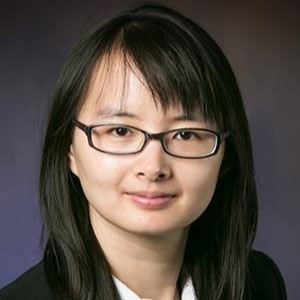
Qian Chen
University of Illinois at Urbana-Champaign, USA

Yifan Cheng
University of California San Francisco and Howard Hughes Medical Institute, USA
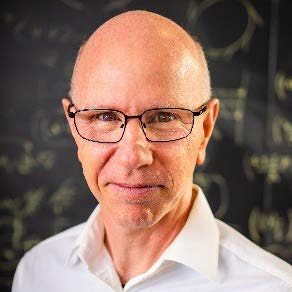
Amir Yacoby
Harvard University, USA
Speakers

Karen Bustillo
Lawrence Berkeley National Laboratory, USA
Karen Bustillo is a staff member at the National Center for Electron Microscopy (NCEM), Molecular Foundry, Lawrence Berkeley National Laboratory in Berkeley, California. At NCEM, Karen collaborates with scientists worldwide through the U. S. Department of Energy Molecular Foundry User Program to characterize materials with transmission electron microscopy. Dr. Bustillo’s research interests include developing advanced TEM techniques for imaging electron beam-sensitive materials such as polymers, organic small molecules, framework materials, and battery materials. She also has expertise in situ experiments including cryo, heating, mechanical testing, liquid cell, and gas cell. She pursues characterization of nanostructures using the spectroscopy capabilities of the TEM especially with respect to elemental quantification and data analysis.
Shelly Conroy
Imperial College London, England
Funded by the Royal Society and Tata, the Conroy Group develops multiferroic thin films with atomic scale precision and advances in situ and correlative electron microscopy, spectroscopy, and atom probe tomography to study dynamic interfaces and defects in functional materials. By combining controlled materials synthesis with advanced characterisation, the group investigates how materials interfaces and internal structures evolve under applied stimuli including electrical bias, temperature, and mechanical strain.
One part of the group focuses on probing the liquid–solid interface in energy (battery) materials using liquid cell electrochemistry TEM, hard X ray beamline measurements, and correlative cryogenic TEM and atom probe tomography to understand electrochemical processes at the atomic scale. The other half of the group, funded by the ERC Consolidator Grant DISCO, investigates and manipulates the dynamically evolving electric and magnetic phases that emerge at ferroic domain walls. Using helium cooled cryogenic TEM, the group also probes low temperature electronic and magnetic phases at the atomic scale.
Dr. Conroy is Co Director of the CDT in Materials 4.0 and Royce Imperial Academic Champion for Thin Film Growth. She holds a joint appointment at Tyndall National Institute as a Principal Researcher and is a Mercator Fellow at Friedrich Alexander Universität Erlangen Nürnberg. She also serves as Leader of the Focused Interest Groups of the Microscopy Society of America.
Before joining Imperial, Dr. Conroy held a Science Foundation Ireland Industry Research PI grant with Analog Devices Inc.: 'Dynamic Atomic Interface Characterisation for Improved Performance of Electrical and Magnetic Devices'. This work investigated magnetoresistance devices based on dynamic magnetic domain walls using MOKE and differential phase contrast STEM under applied bias and heating. She also studied in situ electrical breakdown and atomic scale phase changes in high voltage isolation polymer products and conducting PEDOT polymers using in situ TEM.
Dr. Conroy previously worked at Pacific Northwest National Laboratory as a permanent staff scientist before joining the University of Limerick as a Science Foundation Ireland Analog Devices Research Fellow and principal investigator. She holds a PhD in AlN thin film growth for optoelectronic device applications and in situ TEM from Tyndall National Institute and University College Cork, Ireland. Her PhD was funded by a Science Foundation Ireland PhD scholarship and seed funded by Intel Ireland.
Peter Crozier
Arizona State University, USA
Adrian Ferré-D’Amaré
National Institutes of Health, USA
Franz Giessibl
University of Regensburg, Germany
Franz J. Giessibl holds the chair for quantum nanoscience at the University of Regensburg in Germany and is a research professor at Kanazawa University in Japan. He is a pioneer in atomic force microscopy (AFM) who started as the PhD student of Nobel Laureate Gerd Binnig at the IBM Physics Group Munich at LMU in 1988. In his PhD thesis, he built the first AFM for low temperatures and ultrahigh vacuum (UHV) together with Gerd Binnig and Christoph Gerber and obtained true atomic resolution on an ionic crystal. After that, he joined an AFM manufacturer in Silicon Valley, designed and built a UHV AFM and launched the field of atomically resolving noncontact AFM by demonstrating true atomic resolution on the 7x7 reconstruction of silicon for the first time. In 1995, he joined McKinsey as a management consultant and invented the qPlus sensor, a novel core for the AFM, in his home laboratory on weekends. He joined Augsburg University in 1997 where he obtained his habilitation in 2001. An extended version of his habilitation thesis was published in Reviews of Modern Physics in 2003 with currently more than 3500 citations – it is generally considered one of the foundational review papers in AFM.
In 2005, he received offers for chairs at the University of Bristol and University of Regensburg, joining the latter in 2006. Since then, he did key AFM experiments from atomic manipulation, subatomic spatial resolution, artificial atoms, topological insulators and others. Important results were also obtained in collaborations with the IBM labs in Almaden and Zurich, NIST in Gaithersburg, the National University of Singapore, Kanazawa University and others. His main invention, the qPlus sensor, is standard today for low temperature AFMs, it is used by seven international AFM manufacturers and operates in more than 500 low temperature AFMs globally today. In 2026, the AFM market leader launched an AFM that uses the qPlus sensor in ambient conditions.
Franz J. Giessibl is a Fellow of the American Physical Society, the European Academy for Sciences and Arts in Salzburg, the European Academy of Sciences in Brussels, the Japanese Vacuum- and Surface Science Society and a distinguished Fellow of the International Engineering and Technology Institute. He has won several international science prizes, including the Feynman Prize on Nanoscience, the Heinrich Rohrer Grand Medal, the NIMS Award, the APS Keithley Prize and the MRS Innovation in Materials Characterization Award.
He also worked with an eminent visual artist as published in his 2022 book “First View Inside an Atom. Encounters with Gerhard Richter between Art and Science”. In 2026, his new book “Atomic Force Microscopy and Atomic Manipulation. An Inquiry into Matter” will appear with Springer Nature.

Drew Higgins
McMaster University, Canada
John Jimah
Princeton University, USA
Aaron Kuan
Yale University, USA
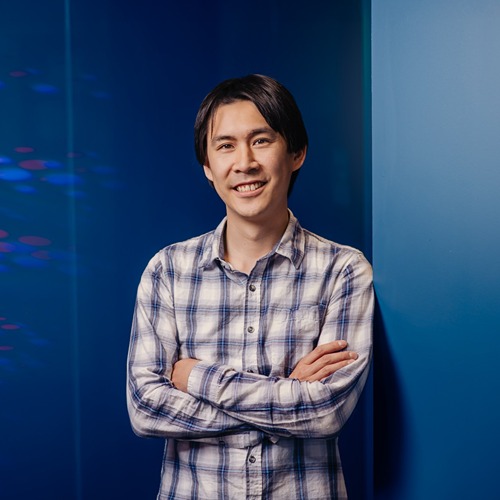
Aaron Kuan investigates how circuit connectivity within and between brain areas supports a diverse array of functions. His lab aims to apply circuit-mapping techniques at brain-wide scales to understand how brain wiring underlies cognition and neurological diseases. Kuan develops new electron microscopy and X-ray imaging techniques to enable 3D imaging of neuronal circuits with unprecedented resolution and scale and combines these approaches with behavior and functional imaging to reveal how circuit connectivity underlies brain activity and, ultimately, cognition. The long-term research goal is to extend high-resolution circuit mapping techniques to brain-wide scales to unite "top-down" and "bottom-up" views of brain anatomy and function.

Ju Li
Massachusetts Institute of Technology, USA
Ju was elected Fellow of the American Physical Society in 2014, a Fellow of the Materials Research Society in 2017 and a Fellow of AAAS in 2020. Li is the chief organizer of MIT A+B Applied Energy Symposia that aim to develop solutions to global climate change challenges with “A-Action before 2040” and “B-Beyond 2040” technologies. ( https://www.youtube.com/@mitab3889/videos).
Yuzhang Li
University of California, Los Angeles, USA
Kathryn Ann Moler
Stanford University, USA
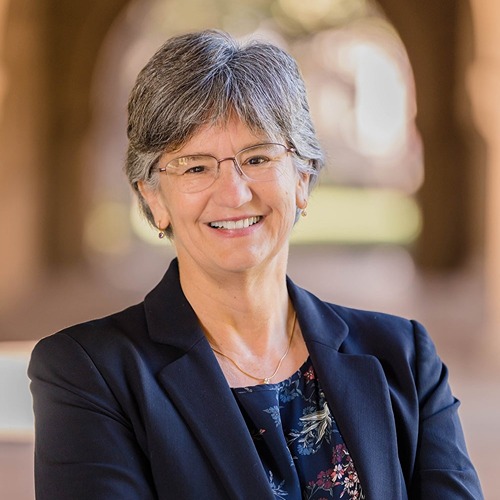
Kathryn A. “Kam” Moler is the Marvin Chodorow Professor at Stanford University, where she previously served as Vice Provost and Dean of Research from 2018 to 2023 and currently serves as Vice President for SLAC. A physicist with both a B.S. and Ph.D. from Stanford, her work has been recognized by her election to the National Academy of Sciences and as a Fellow of the American Physical Society. Her other notable honors include the Presidential Early Career Award for Scientists and Engineers (PECASE) and the William L. McMillan Award for outstanding contributions in condensed matter physics.
Reza Paraan
Biohub, USA
Huaizong Shen
Shenzhen Medical Academy of Research and Translation (SMART), China
Ellen Zhong
Princeton University, USA
In partnership with