
Event details

Program highlights include:
- Disease surveillance, modelling and forecasting
- Antimicrobial resistance and drug development
- Challenges in diagnostic and screening
- Disease prevention strategies
- Future of vaccination and disease eradication
- Climate change and One Health approaches
- Pandemic preparedness
Join us in Manipal for three days of insightful discussions, collaboration, and forward-thinking science.
Keynote Speakers

Lauren Gardner
Alton and Sandra Cleveland Professor, Department of Civil and Systems Engineering
Johns Hopkins University (Maryland, USA)

Marion Koopmans
Professor of Public Health Virology and Scientific Director of the Pandemic & Disaster Preparedness Center
Erasmus University Rotterdam (Rotterdam, Netherlands)
Prof. Marion Koopmans is a professor of Public Health Virology in the Department of Viroscience at Erasmus Medical Centre in The Netherlands, director of the WHO collaborating centre for Emerging Infectious Diseases, scientific director for Emerging Infectious Diseases of the Netherlands Centre for One Health NCOH and scientific director of the Pandemic and Disaster Preparedness Centre in Rotterdam/Delft The Netherlands.
Her research focuses on emerging infections with special emphasis on unravelling pathways of disease emergence and spread at the human animal interface. Creating global networks to fight infectious diseases systematically and on a large scale is a common thread in Koopmans' work.
Koopmans coordinates the EU funded consortium VEO, which develops a risk based innovative early warning surveillance in a One Health context, and is deputy coordinator of a recently awarded HERA funded network of centres of excellence for EID research
preparedness. In 2021, Koopmans founded the Pandemic and Disaster Preparedness Centre PDPC, a research centre with a focus on the occurrence and prevention of pandemics and climate-related disasters, combining expertise from technical, bio-medical, environmental and social sciences.
During the corona crisis in the Netherlands in 2020, Koopmans was a member of the Outbreak Management Team that advised the national government on measures to stop the spread of SARS-CoV-2. This role brought her national prominence, making her partly a "beacon of reliability" but she also faced growing distrust from a vocal minority of opponents of the Dutch national government's corona policy.
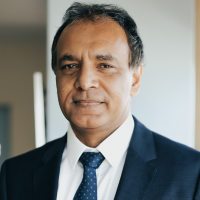
Shabir A. Madhi
Professor of Vaccinology
University of the Witwatersrand (Johannesburg, South Africa)
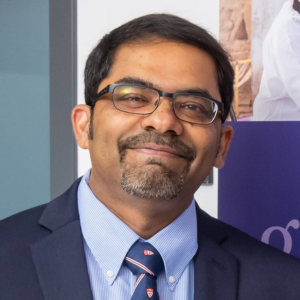
Madhukar Pai
Professor and Chair, Department of Global and Public Health
McGill University (Montreal, Canada)
Prof Madhukar Pai, MD, PhD, FCAHS, FRSC is the Inaugural Chair, Department of Global and Public Health at the McGill School of Population and Global Health. He holds a Tier 1 Canada Research Chair in Epidemiology & Global Health. He was previously Director of the McGill International TB Centre. He was the inaugural Editor-In-Chief of PLOS Global Public Health. He is an elected Fellow of the Royal Society of Canada, and a Fellow of the Canadian Academy of Health Sciences.
Speakers

Tahmeed Ahmed
Executive Director
International Centre for Diarrhoeal Disease Research (icddr,b) (Dhaka, Bangladesh)
Dr Tahmeed Ahmed is the first Bangladeshi scientist to serve as Executive Director of icddr,b, where he has dedicated forty years to research and institutional leadership. A physician and public health researcher, his career spans pioneering work in nutrition, gastroenterology, and infectious diseases, with lasting contributions to improving public health in resource-limited settings.
He guided icddr,b’s research teams to undertake a wide range of COVID-19 studies, covering infection, transmission dynamics, treatment, and diagnostics. Among his notable achievements is the work on Microbiota Directed Complementary Food (MDCF) with Professor Jeffrey Gordon of Washington University at St. Louis, recognised in TIME magazine’s Best Inventions 2025 for its social impact on childhood malnutrition. He also developed Sharnali, a locally produced therapeutic food for children suffering from severe acute malnutrition. Named among TIME’s 100 Most Influential People in Health, Dr Ahmed continues to promote evidence-based health solutions globally. He is a member of the Global Task Force on Cholera Control (GTFCC) and Professor of Public Health Nutrition at the BRAC James P Grant School of Public Health.

Partha Basu
Head, Early Detection, Prevention & Infections Branch
International Agency for Research on Cancer, World Health Organization (Lyon, France)

Tanmoy Chakraborty
Associate Professor, Dept. of Electrical Engineering and Yardi School of Artificial Intelligence
Indian Institute of Technology (Delhi, India)
Katharina Hauck
Professor in Health Economics
Imperial College (London, UK)

Vandana K.E.
Professor, Department of Microbiology
Manipal Academy for Higher Education (Manipal, India)

Sharonann Lynch
Co-Director, Center for Global Health Policy & Politics
Georgetown University (Washington, D.C., USA)

Michael Mina
Senior Lecturer, M.I.T. Sloan School of Management and
Chief Medical Officer and Chief Epidemologist, Invivyd (Massachusetts, USA)

Nicaise Ndembi
Deputy Director General, Regional Director
IVI Africa Regional Office (Kigali, Rwanda)

Elaine Nsoesie
Associate Professor in the Department of Global Health
Boston University (Massachusetts, USA)
Elaine O. Nsoesie is an Associate Professor in the Department of Global Health at the Boston University School of Public Health. She is an internationally recognized data scientist and a leading voice on the use of data and technology to advance health equity. She is a Data Science Faculty Fellow and was a Founding Faculty of the Boston University Faculty of Computing and Data Sciences. She co-edited and contributed to the book, Urban Health in Africa – a collection of essays by thirty eight scholars focused on addressing critical issues related to urbanization in Africa.
She served as a program lead and senior advisor to the Artificial Intelligence/Machine Learning Consortium to Advance Health Equity and Researcher Diversity (AIM-AHEAD) Program at the National Institutes of Health through the Intergovernmental Personnel Act (IPA) Mobility Program. She also led the Racial Data Tracker project at the Boston University Center for Antiracist Research.
She has expertise in the application of data science methods (including, machine learning and artificial intelligence) and data from non-traditional public health sources (such as, mobile phones, satellites, and social media) to address major global health challenges. Her work approaches health equity from multiple angles, including increasing representation of communities typically underrepresented in data science through programs like Data Science Africa and AIM-AHEAD; addressing bias in health data and algorithms; and using data and policy to advance racial equity. She has collaborated with local departments of health in the U.S. to improve disease surveillance systems, international organizations like UNICEF and UNDP, and served as a Data & Innovation Fellow in the Directorate of Science, Technology, and Innovation (DSTI), The President’s Office, Sierra Leone.

Joacim Rockloev
Director of the Heidelberg Planetary Health Hub
Heidelberg Institute of Global Health & Interdisciplinary Centre for Scientific Computing (Heidelberg, Germany)
Professor Joacim Rocklöv is an Alexander von Humboldt Professor at Heidelberg University with a focus on modelling of climate-sensitive infectious diseases. He heads the Heidelberg Planetary Health Hub, which is dedicated to developing and applying innovative methods to understand and predict how climate change and the polycrisis influences infectious disease dynamics and how the impact may unfold into the future.

Rada Savic
Professor of Medicine and Bioengineering
University of California, San Francisco (California, USA)
Dr. Rada Savic is a Professor at the University of California, San Francisco (UCSF), Director of UCSF’s Clinical Pharmacology and Therapeutics Fellowship Program, Co-Director of the UCSF Center for TB, and a pioneering leader in drug development intelligence, leveraging data science, computational tools, and AI to accelerate and de-risk drug discovery and development to advance drug development and routine drug therapy in infectious diseases including special populations such as children and pregnant women. Dr. Savic applies innovative, quantitative, and systems pharmacology methods to propose optimized and precision dosing strategies, data-driven risk stratification algorithms, and inspires new clinical simulation tools across the infectious disease landscape. Dr. Savic's unique expertise in data, modeling, and knowledge integration positions her at the center of many development projects where she collaborates with teams across all drug discovery and development stages. She is currently a member of the TB Drug Accelerator, a chair of A5409 (an ACTG-funded platform clinical trial for TB regimens), a member of UNITE4TB (EU-based TB clinical trial collaborative), a member of CDC-funded TB Trial Consortium, and the leader of the Preclinical Design and Clinical Translation of Regimens for TB (PReDiCTR-TB) Consortium, an international collaboration for TB Regimen Development. Recognized for her groundbreaking contributions, Dr. Savic is a Chan-Zuckerberg Biohub Investigator, and winner of the 2025 Malle Jurima-Romet Mid-Career Leadership Award.
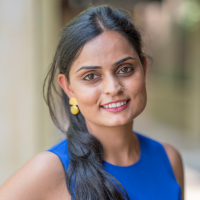
Meru Sheel
Professor of Infectious Diseases and Global Health, Faculty of Medicine and Health
The University of Sydney (Sydney, Australia)

Alessandro Vespignani
Sternberg Family Distinguished University Professor and Director, Network Science Institute
Northeastern University (Massachusetts, USA)

Kelly Wyres
Associate Professor & Research Group Leader Department of Infectious Diseases
Monash University (Melbourne, Australia)
Assoc/Prof Kelly Wyres is a computational microbiologist who’s research focusses on genomic and metabolic diversity of bacterial pathogens. Most notably, these include the World Health Organization’s #1 ranked priority antimicrobial resistant organism- Klebsiella pneumoniae. Kelly is a Research Group Leader and Co-Lead for the Infectious Diseases Genomics program at the Department of Infectious Diseases, Monash University. She also co-leads the KlebNET Genomic Surveillance Platform, a multi-national consortium working to develop and harmonise resources that support global surveillance for Klebsiella species and Escherichia coli. Kelly has received prestigious research funding awards, including a National Health and Medical Research Council of Australia Investigator Grant, Australian Research Council Discovery Project awards and Gates Foundation Investments. Her work has gained international recognition, as evidenced by a recent Australian Society for Microbiology Frank Fenner Award and nomination as a Clarivate Highly Cited Researcher.

Lianping Yang
Associate Professor, School of Public Health, Sun Yat-sen University and
Adjunct Researcher, Institute for Global Health and Development, Peking University
Short Talk Presenters

Harish Tiwari
DBT Wellcome Trust India Alliance Intermediate Fellow
Indian Institute of Technology Guwahati (IITG) (Assam, India)

Nilesh Makwana
Postdoctoral Fellow, Department of Biological Sciences and Engineering
Indian Institute of Technology Gandhinagar (IIT) (Gandhinagar, India)
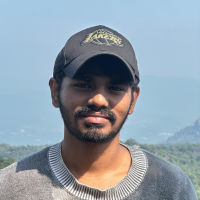
Arvinth Shanmugam
Post Baccalaureate Research Fellow
Indian Institute of Technology (Madras, India)

Subhash Thuluva
Senior VP & Head- Clinical Development
Biological E.Limited (Hyderabad, India)