

Organized by The Hong Kong Polytechnic University, Nature Electronics, Nature, Nature Materials, Nature Sensors and Nature Photonics.
The Nature conference on “Fiber-based Electronics and Photonics” will highlight the latest advances in a field occurring at the intersection of electronics, optoelectronics, materials science, and nanofabrication. Recent advances in fiber- and textile-based smart materials have led to progress in system-level applications, and selected keynotes and invited talks will focus on the potential of this technology in areas such as healthcare, energy, human–machine interfaces, and communications.
Register Now Submit Abstract Deadline: Feb.21, 2027 Contact Us
Event details
Keynote Speakers

Yoel Fink
Massachusetts Institute of Technology (MIT), USA
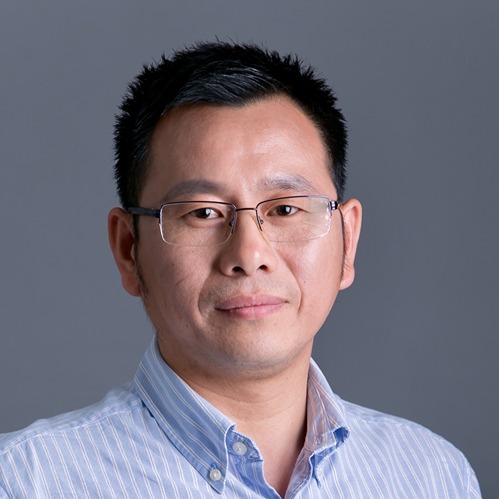
Huisheng Peng
Fudan University, China
Huisheng Peng is currently the University Professor of Fudan University. He focuses on the cross-disciplinary field among chemistry, physics, energy and biomedical science, with a focus on fiber electronics. Professor Peng and co-workers have discovered a new family of fiber solar cells, batteries, sensors, integrated circuits and displays. He has published over 470 papers, received over 110 licensed patents with over 50 royally transferred to the industry, and initiated a few companies with a series of products on fiber devices. Professor Peng makes editorial services for over 20 journals, such as Editor-in Chief of both Watt and New Science, Section Editor of National Science Review and editorial board members of Advanced Functional Materials and Progress in Polymer Science. He receives over 40 awards including the Second Prize of National Natural Science Award in 2019, Top Ten Science Achievements in China in 2021, the First Prize of National Teaching Award in 2022, Falling Walls Foundation Winner in Engineering and Technology in 2022, and IUPAC Top Ten Emerging Technologies in Chemistry in 2022. He was elected to Chinese Academy of Sciences in 2023.
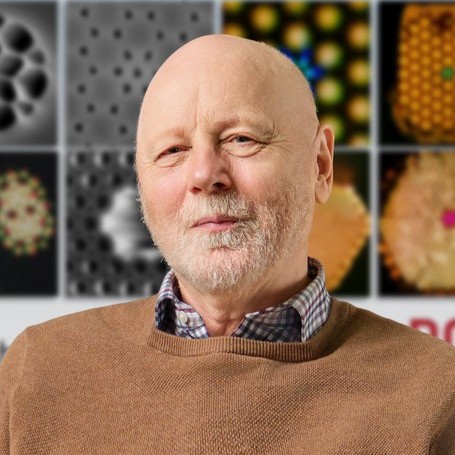
Philip Russell
RCALS Centre for Advanced Lightwave Science, China
Philip Russell obtained his MA (1976) and DPhil (1979) degrees at Magdalen College, University of Oxford, moving in 1978 to Oriel College as a Hayward Junior Research Fellow. He was an Alexander von Humboldt Fellow at the Technical University of Hamburg-Harburg (1981-83) and subsequently worked at the IBM Watson Research Center in New York, as well as the universities of Nice, Southampton and Kent. From 1996 to 2005 he was Professor of Experimental Physics at the University of Bath, and from October 2005 to March 2021 he held the Krupp Chair in Experimental Physics at the University of Erlangen-Nuremberg, Germany. In 2009 he co-founded the Max-Planck Institute for the Science of Light (MPL) in Erlangen. In June 2016 he received an honorary doctorate from the Universidad Internacional Menéndez Pelayo in Santander, Spain. Following his retirement as MPL director, in April 2024 he became scientific director of the RCALS Centre for Advanced Lightwave Science in Hangzhou, China. He is a Fellow of the Royal Society and Optica (formerly The Optical Society, OSA), a Foreign Member of the Chinese Academy of Sciences, and has won a number of awards including the 2000 OSA Joseph Fraunhofer Award/Robert M. Burley Prize, the 2002 Applied Optics Division Prize and the 2005 Thomas Young Prize of the Institute of Physics (London), the 2005 Körber Prize for European Science, the 2013 EPS Prize for Research into the Science of Light, the 2014 Berthold Leibinger Zukunftspreis, the 2015 IEEE Photonics Award and the 2018 Rank Prize for Optoelectronics. In September 2026 he was presented with a Chinese Government Friendship Award. He was OSA's President in 2015, the International Year of Light. https://scholar.google.com/citations?user=1Q5uQNUAAAAJ&hl=en&oi=ao
Xiaoming Tao
The Hong Kong Polytechnic University, China
Speakers

Trisha Andrew
University of Massachusetts Amherst, USA
Professor Trisha L. Andrew is a Professor of Chemistry, Chemical Engineering and Materials Science & Engineering at the University of Massachusetts Amherst. She directs the Wearable Electronics Lab, a multi-disciplinary research team that uses chemical vapor deposition to create a plethora of polymer coatings on unconventional substrates, such as textiles, yarns and living plants, and demonstrates the uses of these coated samples in varied energy harvesting/storage and integrated sensing systems.

Tural Khudiyev
National University of Singapore (NUS), Singapore
Tural Khudiyev is an Assistant Professor in the Department of Materials Science and Engineering at the National University of Singapore (NUS). Prior to joining NUS, he was a Postdoctoral Associate and Research Scientist at the Massachusetts Institute of Technology (MIT). His research focuses on advanced functional fibers, with applications in wearable electronics, bioelectronics, soft robotics, and AI-enabled healthcare.
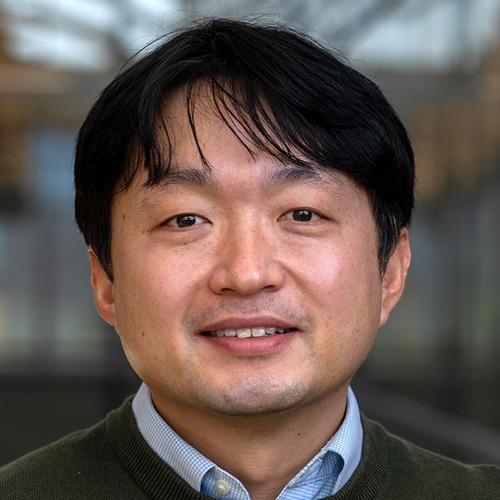
Chi Hwan Lee
Purdue University, USA
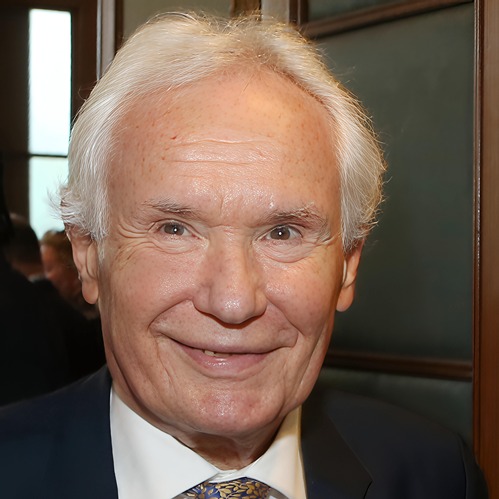
Sir David Payne
University of Southampton, UK
Prof Sir David N. Payne is an internationally distinguished research pioneer in photonics, having been in the field for nearly 60 years. Optical fibre technology is one of the greatest scientific successes of the last three decades and Payne’s contributions are acknowledged as seminal in many areas. Payne’s work spans many diverse areas of photonics, from telecommunications and optical sensors to nanophotonics and optical materials. With his colleagues he has made many of the key technical achievements in almost every area of optical fibre technologies and his work has had a direct impact on worldwide telecommunications, as well as nearly all fields of optical R&D. David’s pioneering work in fibre fabrication in the 70’s resulted in almost all of the special fibres in use today. He led the team that in 1985 first announced the silica fibre laser and the Erbium-Doped Optical Amplifier (EDFA), the device that fuelled an explosive growth in the internet through its ability to transmit and amplify vast amounts of data. The EDFA is widely regarded as being one of the foremost and most significant developments in modern telecommunications.
David has been awarded the top American, European and Japanese prizes in photonics, a rare achievement. As well as the UK Rank Prize for Optics and the prestigious US Tyndall Award, he is a Franklin Laureate (USA), an Eduard Rhein Laureate (Europe) and a Millennium Prize Laureate. In 2013, he was Knighted for services to photonics in the Queen’s New Year’s Honours and in 2018 with his colleagues won the Queen's Anniversary Prize that celebrates excellence, innovation and public benefit in work carried out by UK universities. Prof Payne is a Fellow of the Royal Society, the Royal Academy of Engineering, the National Academy of Engineering (USA), the Indian Academy of Engineering, the Russian, Indian and Norwegian Academy of Sciences, the IET (UK), the IoP (UK) and the Optical Society of America. Among many prizes, he has been awarded the Mountbatten Medal of the IEE (2001), the Kelvin Medal of the eight major engineering institutions for distinction in the application of science to engineering (2004), the IEEE Photonics Award (2007), the Marconi Prize (2008), the IEEE James Clerk Maxwell Award (2014) and the VinFutures Grand Prize (2022).
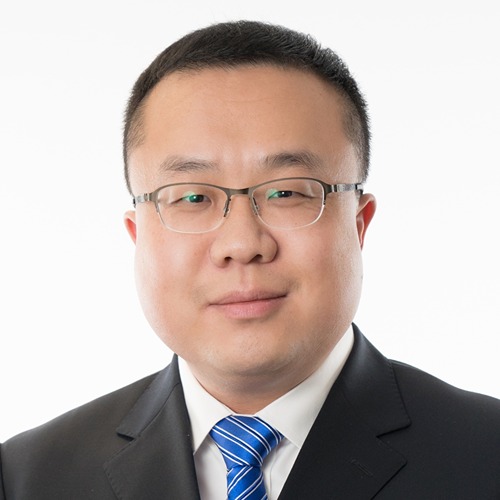
Lei Wei
Nanyang Technological University (NTU), Singapore
Dr. Lei Wei is a Professor and Provost’s Chair Professor at Nanyang Technological University (NTU) in Singapore. Dr. Wei’s research focuses on fiber-based devices, functional fibers, bio-fiber interfaces, in-fiber energy generation and storage, and smart fabrics. At NTU, he serves as Associate Chair (Research) and Director of the Centre for Optical Fibre Technology. He is also the Chair of the Optica Singapore Section and a Fellow of Optica.

Meifang Zhu
Donghua University, China
Professor Meifang Zhu is a Member of the Chinese Academy of Sciences and a Fellow of The World Academy of Sciences (TWAS). She is a professor at Donghua University and currently serves as Director of the State Key Laboratory of Advanced Fiber Materials. She is also Vice President of the Chinese Materials Research Society (C‑MRS), Vice President of the China Women's Association for Science and Technology (CWAST), as well as the Editor‑in‑Chief for Advanced Fiber Materials.
Prof. Zhu has long been engaged in the research of functional fibers, nanofibers and intelligent fiber materials, organic/inorganic hybrid materials. She published 10 books (chapters) and more than 600 SCI papers in peer‑reviewed journals. She holds over 300 National Invention Patents, and many of which have been successfully transferred and applied through collaboration with enterprises. Her honors and awards include Second Prize of National Award for Technological Inventions, Second Prize of National Award for Progress in Science and Technology, National Innovation Competition Award, First Prize of Shanghai Natural Science Award, etc. She is a Distinguished Young Scholar of the National Natural Science Foundation of China, Changjiang Scholar Distinguished Professor, and a leading talent in scientific and technological innovation under China's "Ten Thousand Talents Program". The team she leads has been selected as one of the first "Huang Danian‑style Faculty Teams" in Chinese universities.