REGISTRATION
The deadline to register is:
Monday 17 August, 2026
Contact Us
Registration fees
All fees are in €, Euros.
Tickets including the Gala Dinner on Wednesday 9 September at Maison des Polytechniciens (Hôtel de Poulpry) are available for an additional €80.
| Regular 1 March - 15 July, 2026 |
Late From 16 July, 2026 |
|
|---|---|---|
| Student | €400 | €500 |
| Student + Gala Dinner | €480 | €580 |
| Academic | €750 | €1,000 |
| Academic + Gala Dinner | €830 | €1,080 |
| Industry | €1,500 | €2,500 |
| Industry + Gala Dinner | €1,580 | €2,580 |
Regular booking: 1 March - 15 July, 2026
Registration
Your registration typically includes:
- All scientific presentations
- Poster sessions
- Meals as indicated in the conference programme (Conference Dinner at Maison des Polytechniciens (Hôtel de Poulpry) is available at an additional cost)
- Programme book
Cancellation Policy
- Cancellation by 1 August, 2026: 100% refund.
- Cancellation after 1 August, 2026: No refund.
Visa Requirement?
Some registrants may require an invitation letter to support their visa application. Requests for invitation letters should be submitted by contacting us. Please note that invitation letters are issued only to registered participants.
Contact for Visa LetterAt Nature Research we collect, process and store your details to enable you to attend this conference as a delegate. For that purpose, we also need to share this information with our partners or sponsors, for example, in the production of conference programme materials like participant lists and name badges. We may use this information internally within Nature Research for analysis purposes but we won’t share it with any third parties who are not associated with this conference unless we have your permission as detailed in our Privacy Policy.
Event details
Speakers
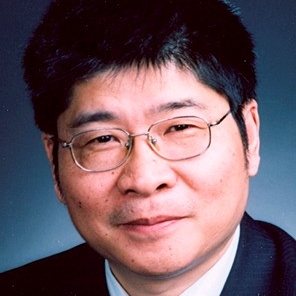
Huangxian Ju
Nanjing University
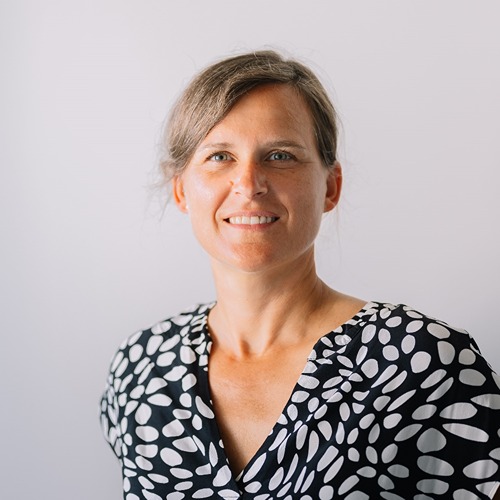
Sandra Barteit
Heidelberg University
Dr. Sandra Barteit is a research group leader in Digital Global Health at the Heidelberg Institute of Global Health, University Hospital Heidelberg. Her research sits at the intersection of artificial intelligence, data science, and sensor-based and wearable technologies, with a focus on the health impacts of climate change on vulnerable populations in Sub-Saharan Africa and Southeast Asia. She leads the PULSE-AI project, funded by the Carl Zeiss Foundation, which uses AI and wearable sensors to study climate-related health risks and develop scalable health interventions.
Sandra Barteit holds a Dr.sc.hum. in Global Health from Heidelberg University and master's degrees in Analytics (Georgia Institute of Technology), Innovation and Entrepreneurship (HEC Paris), and Computational Linguistics (Heidelberg University). She is completing her Habilitation in Global Health at the Medical Faculty of Heidelberg University and coordinates the Faculty's Global Health elective track.
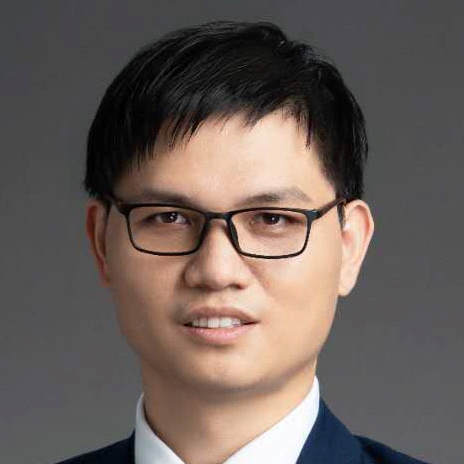
Wei Tu
Shenzhen University
Prof. Wei Tu is a distinguished professor of Urban Informatics in Shenzhen University. He is the Head of the Department of Urban Informatics, Shenzhen University. He received the PhD degree in Photogrammetry and Remote sensing engineering from Wuhan University in 2013. He has been the visiting scholar of MIT and the visiting professor of University College London. His research focuses on urban big data and urban artificial intelligence. He has published over 20 peer-reviewed papers in Science, Nature Health, IJGIS, and CEUS. He is the PI or co-PI of the Projects of National Key Research and Development Program, National Natural Science Foundation of China, Natural Science Foundation of Guangdong Province, and the Science and Technology Commission of Shenzhen, He has been awarded the first prize of geographic information Technology Progress, the first prize of Surveying and Mapping Science and Technology, the Second Prize of Science and Technology Progress of the Ministry of Education.
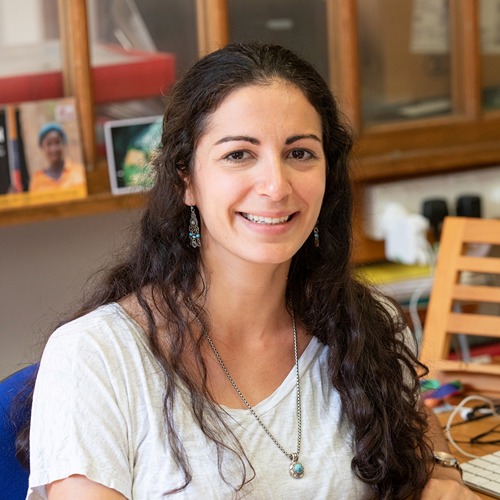
Goylette Chami
Oxford University
Goylette Chami is a Professor of Infectious Disease Epidemiology in the Big Data Institute and Nuffield Department of Population Health at the University of Oxford. She leads a diverse group in Oxford and Uganda, combining expertise in parasitology with statistics, machine learning, and epidemiology. Her group works to improve the understanding of schistosomiasis treatment, control, and active morbidity management, as well as to identify the interactions of hepatosplenic schistosomiasis with endemic co-infections including HIV, hepatitis B, and malaria.
With the Uganda Ministry of Health, she leads a large-scale community-based prospective cohort (SchistoTrack) to follow individuals annually to understand how schistosomiasis-related diseases develop as well as the best methods for targeting transmission reduction. She holds several advisory roles for the WHO, WHO-AFRO, Global Burden of Disease, and UK NIHR among other policy and funding agencies. She has been endorsed as an Exceptional Promise Academic by the Royal Society in clinical public health, profiled by Nature for her research contributions to infectious disease epidemiology, and awarded the Odile Bain Memorial Prize and C.A. Wright Medal for exceptional contributions to the understanding of medical parasitology. She held a Junior Research Fellowship in Medical Sciences at King’s College Cambridge as well as completed MPhil and PhD degrees at the University of Cambridge.
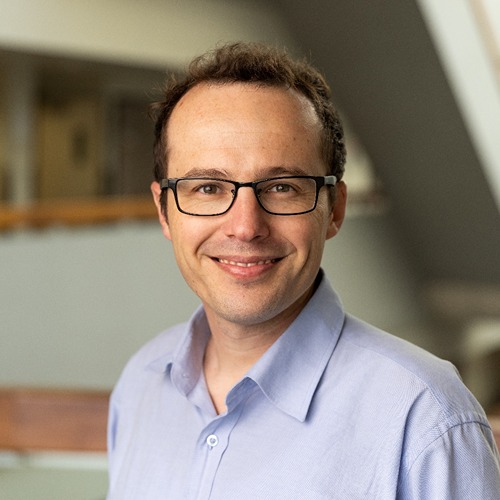
Giorgio Quer
Scripps Research
Giorgio Quer, PhD is Assistant Professor of Digital Medicine and Director of Artificial Intelligence at the Scripps Research Translational Institute in La Jolla, California, where he leads a multidisciplinary data science team within the Scripps Digital Trials Center. His research applies machine learning, large language models, and wearable sensor data to large-scale physiological and clinical datasets, with the goal of turning decentralized, “siteless” clinical trials into predictive tools for real-world care.
Dr. Quer developed the core algorithm of the DETECT study, which identified COVID-19 infection from wearable sensor data and self-reported symptoms, and led its prospective evaluation in a digital clinical trial. In cardiovascular medicine, he developed deep learning models that predict atrial fibrillation from single-lead ECGs, and more recently led the development of ECG-CLIP, a foundation model that learns from ECGs paired with clinical reports to predict a broad range of cardiovascular diseases and outcomes, adapting to new conditions from only a handful of labelled examples. His research also spans multimodal prediction of type 2 diabetes risk, wearable signatures of hormonal change during pregnancy, and digital markers of sleep health.
- title (I may need to update it closer to the conference time): AI and wearable sensors in digital medicine
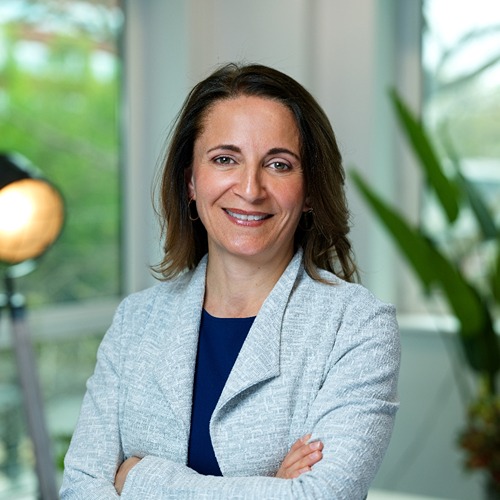
Sandra Bucci
University of Manchester
Sandra Bucci is Professor of Clinical Psychology at the University of Manchester and an NIHR Senior Investigator. She is an Honorary Consultant Clinical Psychologist at Greater Manchester Mental Health NHS Foundation Trust, where she co-directs the Complex Trauma and Resilience Research Unit. Professor Bucci trained as a clinical psychologist at the University of Newcastle, Australia, and worked in Early Intervention in Psychosis services before relocating to the UK.
Her research focuses on developing, evaluating and implementing digital approaches to support people living with severe mental health problems. Grounded in service-user involvement and co-design, her work spans discovery science, intervention development, clinical evaluation, and real-world implementation. She leads a major research portfolio funded by all the major funders and contributes to shaping digital mental health research and practice nationally. She is co-founder and Chief Clinical Officer of CareLoop Health, a digital therapeutics company spun out of the University of Manchester.
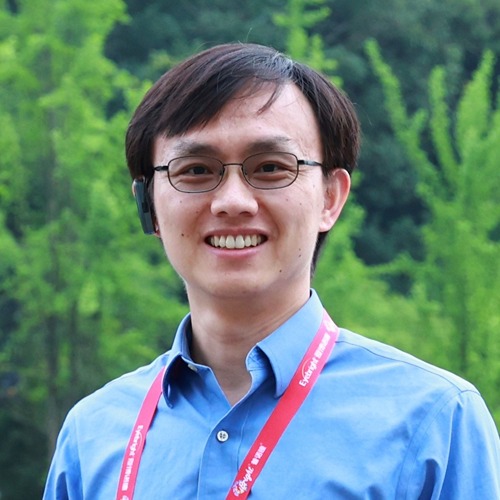
Sheng Xu
Stanford University
Dr. Sheng Xu is a tenured professor and the inaugural Director of Emerging Technologies in the Department of Anesthesiology, Perioperative and Pain Medicine at Stanford University, with courtesy appointments in Electrical Engineering and Materials Science and Engineering. He earned his B.S. degree in Chemistry from Peking University and his Ph.D. in Materials Science and Engineering from the Georgia Institute of Technology. Subsequently, he pursued postdoctoral studies at the Materials Research Laboratory at the University of Illinois at Urbana-Champaign. He then spent 10 years on the faculty at UC San Diego before joining Stanford in 2025. His research group is interested in developing new materials and fabrication methods for soft electronics. His research has been presented to the United States Congress as a testimony to the importance and impact of NIH funding.

Ariel Stern
Universität Potsdam
Dr. Ariel Dora Stern is the Alexander von Humboldt Professor for Digital Health, Economics and Policy at the Hasso Plattner Institute, a Full Professor at the University of Potsdam, and an Adjunct Professor at the Icahn School of Medicine at Mount Sinai. Previously, she spent ten years on the faculty of Harvard Business School and continues to teach in executive education programs for Harvard Medical School. Prof. Stern’s research focuses on innovation and technology management in health care, using methods from econometrics and data science to curate and analyze novel datasets. She has published widely in top journals in medicine, economics, and health care policy, and her research has been cited by Bloomberg, The New York Times, National Public Radio, STAT News, the Handelsblatt, the Frankfurter Allgemeine Zeitung, Die Zeit, and the Tagesspiegel. She is a sought-after commentator and expert on the impact of emerging technologies in healthcare, frequently contributing to conferences, policy discussions, and media coverage.
From 2020-2021, Prof. Stern served as the Director for International Health Care Economics at the Health Innovation Hub, an independent think tank of the German Federal Ministry of Health. She is a member of the Advisory Board of the Peterson Health Technology Institute, the German Society for Digital Medicine, and the Max Planck Institute for Innovation and Competition; a regular commentator on health policy and technology; and an advisor to numerous health care startups. She received her Ph.D. from Harvard University, where she was a National Bureau of Economic Research Predoctoral Fellow in the Economics of Health and Aging. She holds an undergraduate degree in economics from Dartmouth College, where she was a Presidential Scholar and national collegiate figure skating champion.
Jing-Dong Han
Peking University
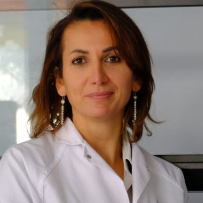
Fabiana Arduini
University of Rome Tor Vergata
Keynote Speakers
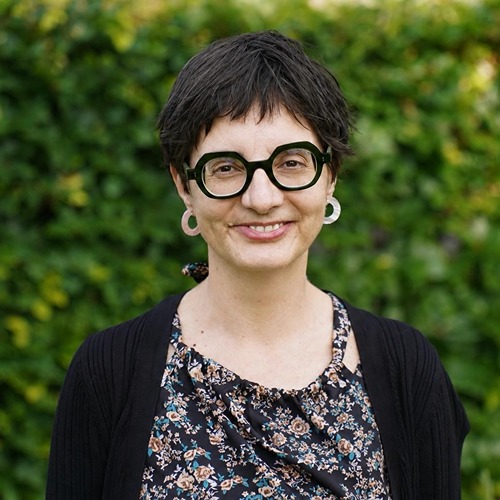
Cecilia Mascolo
University of Cambridge
Cecilia Mascolo is Full Professor of Mobile Systems in the Department of Computer Science and Technology, University of Cambridge, UK. She is also Chief Scientific Officer of auryx, a start up focusing on physiology sensing via in-ear microphones of commercial earbuds. She is also a Fellow of the Royal Academy of Engineering and the recipient of an ERC Advanced Research Grant. Prior joining Cambridge in 2008, she was a faculty member in the Department of Computer Science at University College London. She holds a PhD from the University of Bologna. Her research interests are in wearable systems and machine learning for mobile health. She has published in top tier conferences and journals in the area and her investigator experience spans projects funded by Research Councils and industry. She has served as steering, organizing and programme committee member of wearable and sensor systems and machine learning conferences. More details at www.cl.cam.ac.uk/users/cm542
Speakers
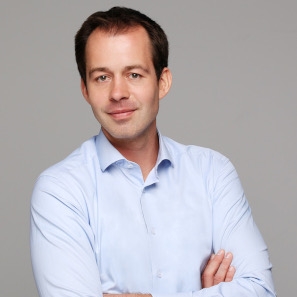
Felix Balzer
Charité – University Medicine Berlin
In partnership with