

Unlock a world of benefits
- Access to all scientific presentations and panel discussions
- Networking opportunities with speakers and Nature editors
- Attend poster session showcasing cutting-edge research
- Connect with peers and foster connections and collaborations
- Receive conference resources, including but not limited to e-program book
- Meals and refreshments included, as noted on the conference program (all dietary preferences typically covered)
- Showcase your research and elevate your profile by presenting an abstract
Agenda
Times are displayed in BST
-
Available On Demand
Tuesday, October 13, 2026
Time Event 4:00 p.m. – 5:00 p.m. Drone Racing Event 5:00 p.m. – 7:00 p.m. Welcome Reception
Reception includes robotics exhibitions and demonstrations7:00 p.m. End of Day -
Available On Demand
Wednesday, October 14, 2026
Time Event 8:00 a.m. – 9:00 a.m. Event Check-in 9:00 a.m. – 9:10 a.m. Welcome SESSION I: ROBOTICS INTELLEGENCE I 9:10 a.m. – 10:00 a.m. Keynote Address
Learning Energy Frugality from Nature, for Embodied Intelligence in Soft Robots
Cecilia Laschi, National University of Singapore (Singapore)10:00 a.m. – 10:25 a.m. Beyond Imitation: From Human Motion to Humanoid Intelligence
Li Yi, Tsinghua University and Beijing Galbot Co., Ltd (Beijing, China)10:25 a.m. – 10:50 a.m. Beyond Sensing: Active Perception for Search, Mapping, and Manipulation in Cluttered Environments
Maren Bennewitz, University of Bonn (Bonn, Germany)10:50 a.m. – 11:05 a.m. Short Talk: Consequence-Aware Decision Making for Autonomous Robotics
Xiao Wang, Anhui University (Anhui, Heifei, China)11:05 a.m. – 11:25 a.m. BREAK 11:25 a.m. – 11:50 a.m. Neural-dynamic computation in robotics
Yulia Sandamirskaya, Zurich University of Applied Science (Zurich, Switzerland)11:50 a.m. – 12:15 p.m. Intelligent Cooperation Within a Shared Embodiment: The Future of Wearable Robotics and Human Augmentation
Lorenzo Masia, Technical University of Munich (Munich, Germany)12:15 p.m. – 12:30 p.m. Short Talk: Runtime Adaptation of Multi-Robot Bale Collection from Natural Language Instructions
Ard Nieuwenhuizen, Wageningen University & Research (Wageningen, Netherlands)12:30 p.m. – 2:00 p.m. LUNCH BREAK AND POSTER SESSION A SESSION II: AUTONOMOUS OPERATION I - FIELD ROBOTICS 2:00 p.m. – 2:50 p.m. Keynote Address
Physical AI: Challenges and Limitations
In-So Kweon, KIST (South Korea)2:50 p.m. – 3:15 p.m. From Neuroscience to Navigation for Autonomous Vehicles
Michael Milford, Queensland University of Technology (Queensland, Australia)3:15 p.m. – 3:40 p.m. Learning Agile and Versatile Legged Locomotion
Hae-Won Park, KAIST (South Korea)3:40 p.m. – 4:05 p.m. Multimodal Robotics for Sustainability
Mirko Kovac, Imperial College London (London, UK)4:05 p.m. – 4:35 p.m. BREAK 4:35 p.m. – 5:15 p.m. Panel Discussion 5:15 p.m. END OF DAY
 Cecilia Laschi Provost's Chair Professor of Robotics National University of Singapore (Singapore)Cecilia Laschi (born 1968) is a notable Italian roboticist and a key figure in the field of soft robotics. She is currently a Provost’s Chair Professor in the Department of Mechanical Engineering at the National University of Singapore (NUS) and the Director of the NUS Advanced Robotics Centre. Laschi holds degrees from the University of Pisa (Computer Science, 1993) and the University of Genoa (Robotics PhD, 1998). Before her tenure at NUS, she was a professor at the BioRobotics Institute of the Scuola Superiore Sant’Anna in Italy, where she focused on bio-inspired robot design.A significant achievement in her career is the OCTOPUS project, which led to the creation of one of the first entirely soft robots, drawing inspiration from the movements of octopus tentacles. This work highlighted the principle of embodied intelligence, suggesting that a robot's physical structure plays a crucial role in interacting with its environment. Beyond marine applications, her research has expanded to biomedical uses, including the development of soft arms for eldercare.As of 2025, she serves as Editor-in-Chief of Bioinspiration & Biomimetics and a Specialty Chief Editor for Frontiers in Robotics & AI. --> Since 2022, she serves as Editor-in-Chief of Bioinspiration & Biomimetics She is a member of the Science Robotics Advisory Board. Laschi continues to be influential in the global robotics community. As of 2025, she serves as Editor-in-Chief of Bioinspiration & Biomimetics and a Specialty Chief Editor for Frontiers in Robotics & AI. She is an IEEE Fellow and founded the IEEE International Conference on Soft Robotics (RoboSoft) in 2018.
 Li Yi Tenure-track assistant professor, Institute for Interdisciplinary Information Sciences (IIIS) at Tsinghua University and Chief Scientist at Beijing Galbot Co., Ltd (Beijing, China)Li Yi is a tenure-track assistant professor in the Institute for Interdisciplinary Information Sciences (IIIS) at Tsinghua University and Chief Scientist at Beijing Galbot Co., Ltd. He received his Ph.D. from Stanford University, advised by Professor Leonidas J. Guibas. And he was previously a Research Scientist at Google. Before joining Stanford, he got his B.E. in Electronic Engineering from Tsinghua University. His recent research focuses on 3D computer vision, humanoid robot learning, and dexterous manipulation, and his mission is to equip robotic agents with the ability of understanding and interacting with the 3D world. He has published papers at top-tier computer vision, computer graphics, and machine learning conferences with more than 40000 citations. And he has served as an Area Chair for CVPR, IJCAI, and NeurIPS. His representative work includes ShapeNet, PointNet++, LATENT.
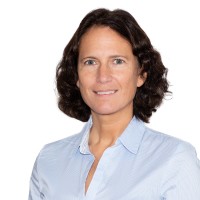 Maren Bennewitz Professor of Computer Science University of Bonn (Bonn, Germany)Maren Bennewitz is a professor for Computer Science at the University of Bonn. She heads the Humanoid Robots Lab and is affiliated with the Lamarr Institute for Machine Learning and Artificial Intelligence. She is also a member of the executive board of the Cluster of Excellence PhenoRob - Robotics and Phenotyping for Sustainable Crop Production and a founding member as well as steering committee member of the Center for Robotics, University of Bonn. She explores innovative ways to integrate robots into human environments and contributes to cutting-edge research projects, combining AI and robotics for sustainable agriculture, cultural heritage, and personalized robot service. Her group has introduced several novel methods for active perception, 3D reconstruction, and planning of navigation and manipulation actions in cluttered and dynamic scenes.
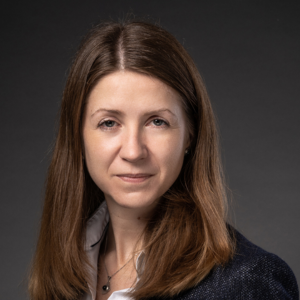 Yulia Sandamirskaya Head of Research Centre: Cognitive Computing in Life Sciences Zurich University of Applied Science (Winterthur, Switzerland)Dr. Yulia Sandamirskaya is a leading figure in the field of neuromorphic computing and embodied artificial intelligence, currently serving as a Full Professor and the Head of the Research Center "Cognitive Computing in Life Sciences" at the Zurich University of Applied Sciences (ZHAW). She leads the Neuromorphic Computing Group, focusing on the development of brain-inspired computing architectures and algorithms for energy-efficient, real-time AI systems, particularly within the domain of robotics. Her academic journey began with a degree in Physics from the Belarusian State University, followed by a doctorate in Physics and Neural Computation from the Ruhr-University Bochum, Germany.Throughout her career, Dr. Sandamirskaya has held significant research and industry positions, including leading research groups at the Institute of Neuroinformatics (INI) at the University of Zurich and ETH Zurich. Notably, she served as the Applications Research Lead for the Neuromorphic Computing Lab at Intel, where she oversaw the development of spiking neural network algorithms for the Intel Loihi hardware platform. Her research leverages the Dynamic Neural Fields (DNF) framework to enable autonomous agents to perform tasks like spatial cognition, navigation, and sensorimotor control, integrating these models with robotic platforms for low-latency interaction. Recognized as a Business Insider Future Maker and a prominent woman in robotics by Robohub, Dr. Sandamirskaya's work bridges the gap between theoretical neuroscience, cognitive science, and practical robotic applications, pushing the boundaries of AI for real-world scenarios in areas such as health and elderly care.
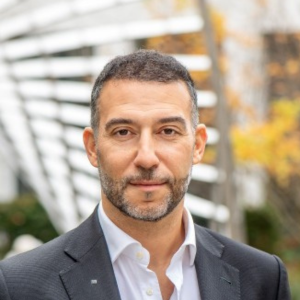 Lorenzo Masia Professor, Intelligent Bio-Robotic Systems Technical University of Munich (Munich, Germany)Prof. Dr. Lorenzo Masia (born 1977 in Rome) earned a Mechanical Engineering degree from Sapienza University of Rome (2003) and a PhD from the University of Padua (2007), then began his robotics career as a researcher at MIT’s Newman Lab for Biomechanics and Human Rehabilitation. He later served as Team Leader at the Italian Institute of Technology (Robotics, Brain and Cognitive Sciences), became Assistant Professor at Nanyang Technological University Singapore (2013–2018), and subsequently Associate Professor in Biodesign at the University of Twente. From 2019 to 2024, he was Full Professor of Biorobotics & Medical Technology at Heidelberg University, where he founded the ARIES Lab (Assistive Robotics and Interactive ExoSuits) at ZITI. Since 1 October 2024, he has been Professor of Intelligent BioRobotic Systems and Executive Director of the Munich Institute for Robotics and Machine Intelligence (MIRMI) at TUM; his internationally recognized work includes multiple major conference awards (including two IEEE Best Paper and three IEEE Best Student Paper Awards) and extensive editorial and leadership roles across top robotics and rehabilitation journals and IEEE RAS conferences, including serving as General Chair of IEEE RAS EMBS BIOROB 2024 in Heidelberg.
 In-So Kweon National Distinguished Researcher, Director for Physical AI, Robotics and AI Institute Korea Institute of Science and Technology (Daejeon, South Korea)In-So Kweon received the BS and MS degrees in Mechanical Design and Production Engineering from Seoul National University, Seoul, Korea, in 1981 and 1983, respectively, and the PhD degree in Robotics from the Robotics Institute, Carnegie Mellon University, Pittsburgh, Pennsylvania, in 1990. He worked for the Toshiba R&D Center, Japan, and joined the Department of Automation and Design Engineering, KAIST, Seoul, Korea, in 1992, where he is now a professor with the Department of Electrical Engineering. His research interests are sensor fusion, color modeling and analysis, visual tracking, and visual SLAM. He was the general chair for the Asian Conference on Computer Vision 2012 and he is on the editorial board of the International Journal of Computer Vision. He has been serving as a director for P3 DigiCar Center which is one of the National Core Research Center since 2010.
 Michael Milford Director, Centre for Robotics and Professor Queensland University of Technology (Brisbane, Australia)Michael Milford, FTSE, conducts interdisciplinary research at the intersection of robotics, neuroscience, and computer vision. He currently holds appointments as Australian Research Council Laureate Fellow, Director of the QUT Centre for Robotics, QUT Professor, Microsoft Research Faculty Fellow, and Fellow of the Australian Academy of Technology and Engineering. He has led or co-led projects totalling more than 56 million dollars in research and industry funding, receiving over 17,000 citations, and his work has culminated in numerous accolades, including six best paper awards (and ten finalists), the ATSE Batterham Medal, a joint outright Queensland Young Tall Poppy award, and was made a Microsoft Research Faculty Fellow, one of only three Australians ever to receive this recognition. From 2022 – 2027 he is leading a large research team combining bio-inspired and computer science-based approaches to provide a ubiquitous alternative to GPS that does not rely on satellites. Michael is also an educational entrepreneur: as founder of Math Thrills, he has produced engaging STEM education materials distributed to over 35 countries for more than 20 years. As a keen mentor, Michael works with individuals and groups, both locally at the individual, institute or university level across Australia, but also globally through his Hacking Academia initiative, and won the 2025 Outstanding Mentor of Researchers Eureka Prize.
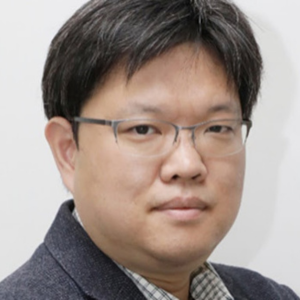 Hae-Won Park Associate Professor, Department of Mechanical Engineering KAIST (Daejeon, South Korea)Hae-Won Park is an Associate Professor in the Department of Mechanical Engineering at the Korea Advanced Institute of Science & Technology (KAIST) and serves as the director of its humanoid robot research center. He earned his Ph.D. from the University of Michigan in 2012, following master's and bachelor's degrees from Yonsei University. Prior to his tenure at KAIST, Park held roles as an Assistant Professor at the University of Illinois at Urbana-Champaign and as a research scientist and postdoctoral researcher at the Massachusetts Institute of Technology (MIT) Media Lab, where he contributed to social robotics projects aimed at children's language education. At KAIST, he leads the Dynamic Robot Control and Design Laboratory, concentrating his research on the control and design of dynamic robot systems, particularly legged locomotion, bio-inspired robots, model predictive control, reinforcement learning, and innovative robot mechanisms. His work has led to the development of agile climbing robots designed for navigating challenging environments. Professor Park's contributions to the field have been acknowledged with honors such as an Early Career Spotlight award at the 2021 Robotics Science & Systems conference, an editorial board membership for the IEEE/ASME Transactions on Mechatronics, and the ICRA DARwIn-OP Humanoids Application Challenge Winner award in 2013.
 Mirko Kovač Head, Laboratory of Sustainability Robotics at EPFL (Swiss Federal Institute of Technology Lausanne) and Empa (Swiss Federal Laboratories for Materials Science and TechnologyProf. Dr. Mirko Kovač is Head of the Laboratory of Sustainability Robotics at the Swiss Federal Institute of Technology Lausanne (EPFL) and the Swiss Federal Laboratories for Materials Science and Technology (Empa) in Zürich. Before his appointment at EPFL, he was full Professor at Imperial College London and still holds a honorary Professor position at Imperial. His research group focusses on the development of novel mobile robots for distributed sensing and autonomous manufacturing in complex natural environments. Prof. Kovač's particular specialisation is in robot design, hardware development and multi-modal sensor mobility. He was post-doctoral researcher at Harvard University and obtained his PhD at the Swiss Federal Institute of Technology in Lausanne (EPFL). He received his undergraduate degree in Mechanical Engineering from the Swiss Federal Institute of Technology in Zurich (ETHZ) in 2005. Since 2006, he has presented his work in more than 120 peer reviewed publications in leading conferences and journals, has won several best paper awards and has delivered over 150 keynote and invited lectures. He also regularly acts as advisor to government, investment funds and industry on robotics opportunities.
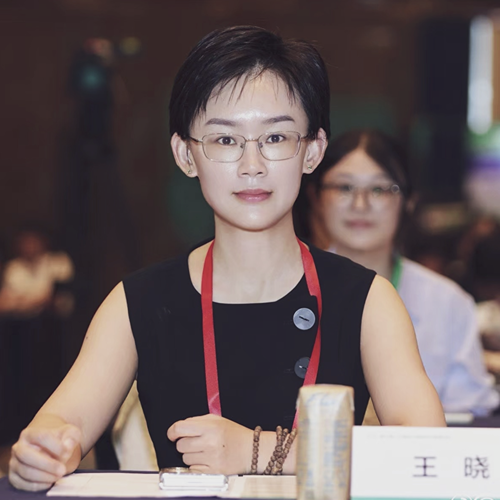 Xiao Wang Executive Dean of the School of Robotics (Embodied Intelligence Research Institute) Anhui University (Hefei, Anhui, China)
 Ard Nieuwenhuizen Senior Researcher in Agro Food Robotics Wageningen University & Research (Netherlands)Dr.ir. Ard Nieuwenhuizen is a Dutch researcher and expert in agricultural robotics, machine vision, and precision agriculture. He is currently a Senior Researcher within the Agro Food Robotics initiative at Wageningen University & Research (WUR) in the Netherlands, leading projects at the intersection of mobile field robotics, computer vision, and autonomous agricultural systems. Nieuwenhuizen completed his academic training and earned his PhD in Agricultural Engineering and Robotics at Wageningen University, where his doctoral research focused on advanced machine vision techniques for site-specific weed control.A major focus of his career has been the development of intelligent, autonomous field robots designed to solve critical real-world agricultural challenges. His work heavily leverages deep learning, computer vision, and AI-driven decision-making systems for applications such as precise weed identification, disease detection, crop harvest assistance, and insect monitoring. Through key European and national projects—including Robs4Crops and Smart Autonomy for Precision Agriculture—he has pioneered self-learning, cooperative multi-robot systems and dynamic path-planning solutions that transition field automation from theoretical research into practical farming environments.In addition to his research, Nieuwenhuizen actively contributes to bridging the gap between cutting-edge AI technology and farm-level implementation. He frequently contributes to international research collaborations, professional forums, and industry initiatives aimed at accelerating sustainable, reduced-input agricultural practices through autonomous robotics.
 -
Available On Demand
Thursday, October 15, 2026
``Time Event 8:00 a.m. – 9:00 a.m. Event Check-In 9:00 a.m. – 9:05 a.m. Welcome SESSION III: ROBOTICS INTELLEGENCE II 9:05 a.m. – 9:55 a.m. Keynote Address
Learning from demonstration: challenges and opportunities
Aude Billard, Swiss Federal Technology Institute of Lausanne (Lausanne, Switzerland)9:55 a.m. – 10:20 a.m. Neuromorphic Embodied Intelligence
Chiara Bartolozzi, Italian Institute of Technology (Italy)10:20 a.m. – 10:45 a.m. Beyond Human-Level Performance: Lessons from GT Sophy and ACE for Autonomous Robotics
Michael Spranger, Sony AI (Tokyo, Japan)10:45 a.m. – 11:00 a.m. Short Talk; Teleoperation of Dexterous Robot Hands with Multi-modal Haptic Glove
Jongseok Nam, KAIST (Daejeon, South Korea)11:00 a.m. – 11:20 a.m. BREAK 11:20 a.m. – 11:45 a.m. From Tactile to Embodied AI: How the sensor should be designed
Wenbo Ding, Tsinghua Shenzhen International Graduate School (Shenzhen, China)11:45 a.m. – 12:10 p.m. Shaping Intelligence: Soft Bodies, Sensors and Experience
Perla Maiolino, University of Oxford (Oxford, UK)12:10 p.m. – 12:25 p.m. Short Talk: A Neurophysiology-Informed Modular Control Architecture for Human Locomotion Simulation
Jaeyong Cho, KAIST (Daejeon)12:25 p.m. – 2:00 p.m. LUNCH AND POSTER SESSION B SESSION IV: AUTONOMOUS OPERATION II: HUMAN-CENTERED ROBOTICS 2:00 p.m. – 2:50 p.m. Keynote Address
An Overview of Research and Robotics at Google Deepmind
Francesco Nori, Google Deepmind (London, UK)2:50 p.m. – 3:15 p.m. Versatile Robotic Leg Prostheses and Exoskeletons for the Real World
Robert Gregg, University of Michigan (Michigan, USA)3:15 p.m. – 3:40 p.m. Neuromorphic AI for autonomous drones
Guido de Croon, Delft University of Technology (Delft, Netherlands)3:40 p.m. – 4:05 p.m. Recreating human locomotion: a neuromorphic framework for physical ai in wearable robotics
Kyoungchul Kong, KAIST (South Korea)4:05 p.m. – 4:30 p.m. Evolutionary Human–Robot Interaction: From Multimodal Sensing to Human–Robot Co-Adaptation
Hang Su, University Paris-Saclay (Paris, France)4:30 p.m. – 4:50 p.m. BREAK 4:50 p.m. – 5:30 p.m. Event Wrap-Up Discussion and Poster Awards 5:30 p.m. END OF CONFERENCE
 Aude Billard Professor, Learning Algorithms and Systems Laboratory EPFL (Lausanne, Switzerland)Aude Billard is full professor and the director of the LASA laboratory at the School of Engineering at the Swiss Institute of Technology Lausanne (EPFL). Prof Billard currently serves as the junior past President of the IEEE Robotics and Automation Society, director of the ELLIS Robot Learning Program and co-director of the Robot Learning Foundation, a non-profit corporation that serves as the governing body behind the Conference on Robot Learning (CoRL), vice-president of the Swiss Robotics Association.
Prof Billard holds a BSc and MSc in Physics from EPFL and a PhD in Artificial Intelligence from the University of Edinburgh. Prof Billard is an IEEE Fellow and the recipient of numerous recognitions, among which the Intel Corporation Teaching award, the Swiss National Science Foundation career award, the Outstanding Young Person in Science and Innovation from the Swiss Chamber of Commerce, the IEEE RAS Distinguished Award, and the IEEE-RAS Best Reviewer Award. Dr. Billard was a plenary speaker at major robotics, AI and Control conferences (ICRA, AAAI, CoRL, HRI, CASE, ICDL, ECML, L4DC, IFAC Symposium, ROMAN, Humanoids and many others) and acted on various positions on the organization committee of numerous International Conferences in Robotics. Her research spans the fields of machine learning and robotics with a particular emphasis on fast and reactive control and on safe human-robot interaction. This research received numerous best conference paper awards, as well as the prestigious King-Sun Fu Memorial Award for the best IEEE Transaction in Robotics paper, and is regularly featured in premier venues (BBC, IEEE Spectrum, Wired). Chiara Bartolozzi Senior Researcher Italian Institute of Technology (Genoa, Italy)Chiara Bartolozzi is senior researcher tenured at the Istituto Italiano di Tecnologia. She earned a degree in Engineering (with honors) at University of Genova (Italy) and a Ph.D. in Neuroinformatics at ETH Zurich, developing analog subthreshold circuits for emulating biophysical neuronal properties onto silicon and modelling selective attention on hierarchical multi-chip systems. She is currently principal investigator of the Event Driven Perception for Robotics group (www.edpr.iit.it), mainly working on the application of the "neuromorphic" engineering approach to the design of sensors and algorithms for robotic perception.Chiara has participated in a number of EU funded projects, she coordinated the H2020 MSCA-ETN "NeuTouch" and FP7 FET "eMorph". As leader of the educational activities of the coordination and support action NEUROTECH, she co-organised the Neuromorphic Colloquium, a series of online events to build up educational material for the next generation of neuromorphic researchers. She is now leading the first Event-Vision School. She is in the scientific board of the Capocaccia Workshop for Neuromorphic Intelligence and the Bangalore Neuromorphic Workshop. She is Senior Editor for NPJ Robotics, IOP Neuromorphic Computing and Engineering, Frontiers in Neuroscience, IEEE JETCAS and TCASI.She is an IEEE CASS and RAS member, former chair of WiCAS and NSA TCs. In 2020, she was general chair of "AICAS2020", on Circuits and systems for efficient embedded AI.
 Michael Spranger President Sony AI (Tokyo, Japan)Michael Spranger is the President of Sony AI, Sony’s strategic research and development organization established April 2020. Sony AI’s mission is to “unleash human imagination and creativity with AI.” Michael is a roboticist by training with extensive research experience in fields such as Natural Language Processing, robotics, and foundations of Artificial Intelligence. Michael has published more than 70 papers at top AI conferences such as IJCAI, NeurIPS and others. Concurrent to Sony AI, Michael also holds a Senior Researcher position at Sony Computer Science Laboratories, Inc., and is actively contributing to Sony’s overall AI ethics strategy.
 Perla Maiolino Associate Professor, Engineering Science, University of Oxford (Oxford, England) and Deputy Director of the Oxford Robotics Institute (Oxford, England)Perla Maiolino is an Associate Professor of Engineering Science at the University of Oxford, where she directs the Soft Robotics Lab within the Oxford Robotics Institute and serves as a Tutorial Fellow at Brasenose College. She holds BEng, MEng, and PhD degrees in Robotics and Automation from the University of Genoa, Italy, where her doctoral research led to the development of CySkin, an artificial robot skin technology now featured at the Science Museum in London. Before joining Oxford in 2018, she conducted postdoctoral research on soft robotics and tactile perception at the Biologically Inspired Robotics Lab at the University of Cambridge.
Professor Maiolino's research is dedicated to providing robots with a sense of touch to facilitate safe and effective physical interaction with their environment and humans. Her work explores technological solutions for soft tactile sensors integrated into soft robotic bodies, investigating how this "embodied intelligence" influences perception and autonomy. A core focus of her lab is the exploration of advanced tactile data processing for human-robot interaction, enabling robots to assess contact parameters like texture, stiffness, and temperature, and to develop sophisticated sensory-motor coordination. Academically, she contributes to the undergraduate curriculum by teaching various Electronic and Information Engineering subjects, including Circuit Analysis, Digital Electronics, Control Theory, and Microcontroller Systems. Francesco Nori Research Science Director Google Deepmind (London, UK)Francesco Nori is a prominent Italian robotics scientist and currently the Director of Robotics at Google DeepMind, where he leads research efforts to advance Artificial General Intelligence (AGI) in the physical world. Born in Padua in 1976, Nori earned his D.Eng. and Ph.D. from the University of Padua, focusing on biologically inspired modular control. He spent a decade at the Italian Institute of Technology (IIT), where he was a principal developer of the iCub humanoid robot, specializing in whole-body motion control and tactile-based force regulation.Nori has bridged the gap between classical control theory and deep reinforcement learning since joining DeepMind in 2017. After the 2023 merger of DeepMind and Google Brain, Nori led major projects, including the Gemini Robotics project and the development of RoboCat, a self-improving foundation agent for robotic manipulation. His recent work includes breakthroughs in robotic agility, such as teaching bipedal robots complex soccer skills and creating the Barkour quadruped benchmark. Nori continues to advocate for the "co-design" of robotic hardware and AI. He emphasizes that embodied intelligence requires physical interaction as a way of gathering knowledge.
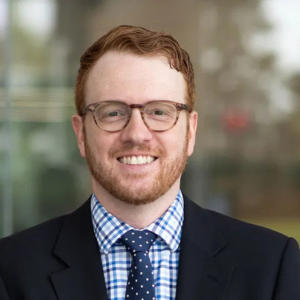 Robert Gregg Director, Locomotor Control Systems Laboratory University of Michigan (Michigan, USA)Robert Gregg is a professor with joint appointments in Robotics, Mechanical Engineering, and Electrical & Computer Engineering at the University of Michigan and is the director of the Locomotor Control Systems Laboratory. His research focuses on developing high-performance, human-assistive wearable robots, such as powered prostheses and exoskeletons, using advanced control theories to improve mobility for individuals with disabilities.
Dr. Gregg's academic background includes a B.S. in electrical engineering and computer sciences from the University of California, Berkeley (2006), and M.S. (2007) and Ph.D. (2010) degrees in electrical and computer engineering from the University of Illinois at Urbana-Champaign. Prior to his tenure at the University of Michigan, which began in 2019, he held positions as an assistant professor at the University of Texas at Dallas and a research scientist at the Rehabilitation Institute of Chicago. His significant contributions to his field have been acknowledged with notable awards, such as the NIH Director's New Innovator Award and the NSF CAREER Award.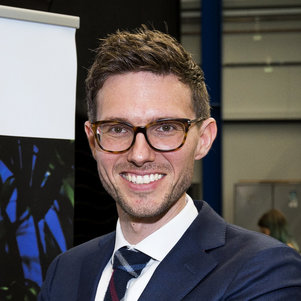 Guido de Croon Full Professor, Bio-inspired Micro Air Vehicles/Scientific Lead, Micro Air Vehicle Laboratory (MAVLab) Delft University of Technology (Delft, Netherlands)Guido de Croon is a Full Professor of Bio-inspired Micro Air Vehicles at Delft University of Technology (TU Delft), where he serves as the scientific lead of the Micro Air Vehicle Laboratory (MAVLab). He earned his M.Sc. and Ph.D. in Artificial Intelligence from Maastricht University and previously worked as a research fellow at the European Space Agency's Advanced Concepts Team. His research focuses on creating computationally efficient, bio-inspired algorithms for autonomous, light-weight flying robots, with an emphasis on computer vision. Prof. de Croon's work includes leading the development of the "DelFly Explorer," a flapping-wing drone capable of autonomous flight and obstacle avoidance, and contributing to a swarm of nano-copters designed for environmental exploration, research that has been published in Science and Science Robotics. Inspired by insect intelligence, his current work involves developing neuromorphic sensing for drones and utilizing principles of biological intelligence to create robust swarms of small drones for applications such as search and rescue and precision agriculture, a research area for which he was awarded the NWO Vici grant in 2024.
Lorenzo Masia Professor, Intelligent Bio-Robotic Systems Technical University of Munich (Munich, Germany)Prof. Dr. Lorenzo Masia (born 1977 in Rome) earned a Mechanical Engineering degree from Sapienza University of Rome (2003) and a PhD from the University of Padua (2007), then began his robotics career as a researcher at MIT’s Newman Lab for Biomechanics and Human Rehabilitation. He later served as Team Leader at the Italian Institute of Technology (Robotics, Brain and Cognitive Sciences), became Assistant Professor at Nanyang Technological University Singapore (2013–2018), and subsequently Associate Professor in Biodesign at the University of Twente. From 2019 to 2024, he was Full Professor of Biorobotics & Medical Technology at Heidelberg University, where he founded the ARIES Lab (Assistive Robotics and Interactive ExoSuits) at ZITI. Since 1 October 2024, he has been Professor of Intelligent BioRobotic Systems and Executive Director of the Munich Institute for Robotics and Machine Intelligence (MIRMI) at TUM; his internationally recognized work includes multiple major conference awards (including two IEEE Best Paper and three IEEE Best Student Paper Awards) and extensive editorial and leadership roles across top robotics and rehabilitation journals and IEEE RAS conferences, including serving as General Chair of IEEE RAS EMBS BIOROB 2024 in Heidelberg.
Guido de Croon Full Professor, Bio-inspired Micro Air Vehicles/Scientific Lead, Micro Air Vehicle Laboratory (MAVLab) Delft University of Technology (Delft, Netherlands)Guido de Croon is a Full Professor of Bio-inspired Micro Air Vehicles at Delft University of Technology (TU Delft), where he serves as the scientific lead of the Micro Air Vehicle Laboratory (MAVLab). He earned his M.Sc. and Ph.D. in Artificial Intelligence from Maastricht University and previously worked as a research fellow at the European Space Agency's Advanced Concepts Team. His research focuses on creating computationally efficient, bio-inspired algorithms for autonomous, light-weight flying robots, with an emphasis on computer vision. Prof. de Croon's work includes leading the development of the "DelFly Explorer," a flapping-wing drone capable of autonomous flight and obstacle avoidance, and contributing to a swarm of nano-copters designed for environmental exploration, research that has been published in Science and Science Robotics. Inspired by insect intelligence, his current work involves developing neuromorphic sensing for drones and utilizing principles of biological intelligence to create robust swarms of small drones for applications such as search and rescue and precision agriculture, a research area for which he was awarded the NWO Vici grant in 2024.
Lorenzo Masia Professor, Intelligent Bio-Robotic Systems Technical University of Munich (Munich, Germany)Prof. Dr. Lorenzo Masia (born 1977 in Rome) earned a Mechanical Engineering degree from Sapienza University of Rome (2003) and a PhD from the University of Padua (2007), then began his robotics career as a researcher at MIT’s Newman Lab for Biomechanics and Human Rehabilitation. He later served as Team Leader at the Italian Institute of Technology (Robotics, Brain and Cognitive Sciences), became Assistant Professor at Nanyang Technological University Singapore (2013–2018), and subsequently Associate Professor in Biodesign at the University of Twente. From 2019 to 2024, he was Full Professor of Biorobotics & Medical Technology at Heidelberg University, where he founded the ARIES Lab (Assistive Robotics and Interactive ExoSuits) at ZITI. Since 1 October 2024, he has been Professor of Intelligent BioRobotic Systems and Executive Director of the Munich Institute for Robotics and Machine Intelligence (MIRMI) at TUM; his internationally recognized work includes multiple major conference awards (including two IEEE Best Paper and three IEEE Best Student Paper Awards) and extensive editorial and leadership roles across top robotics and rehabilitation journals and IEEE RAS conferences, including serving as General Chair of IEEE RAS EMBS BIOROB 2024 in Heidelberg. Kyoungchul Kong Professor, Mechanical Engineering KAIST (Daejeon, South Korea)Kyoungchul Kong is a South Korean mechanical engineer, academic, and entrepreneur whose work sits at the intersection of human-assistive robotics, AI, and neurotechnology. He is a Professor of Mechanical Engineering at KAIST, where he directs the Exoskeleton Laboratory. He earned his Ph.D. from the University of California, Berkeley.His research centers on wearable robots and AI-driven control systems designed to restore mobility in individuals with physical impairments. He has developed platforms including the WalkON Suit series for complete lower-limb paralysis and the Angel Suit for partial paralysis. More recently, his focus has expanded to the pathological analysis of impaired gait and the development of next-generation technologies to overcome it, including brain-computer interface (brain chip) systems and AI foundation models for human motion.To translate this research into clinical and commercial impact, Kong founded Angel Robotics in 2017 and served as CEO through the company's KOSDAQ IPO in 2024. He now serves as CTO and Chairman of the Board.Kong's team has competed in all three Cybathlon international championships, winning medals each time, including gold medals in 2020 and 2024. The 2024 WalkON Suit outperformed competing teams by a factor of three in task completion. Kong has been named a Leader Researcher by the National Research Foundation of Korea, and has received commendations from the South Korean Prime Minister.
 Hang Su Professor, The IBISC Laboratory Université Paris-Saclay, (Évry, France)Hang Su is a Professor at the IBISC Laboratory, Université Paris-Saclay, Évry, France. His research advances robotics and embodied intelligence, with a focus on human–robot interaction and wearable/assistive systems that adapt to human intent and context. He develops learning- and optimization-based methods for multimodal sensing, activity understanding, and adaptive control to enable robust and intuitive human–robot interaction in wearable and assistive systems. He has authored 150+ peer-reviewed publications and received recognitions including the Andrew P. Sage Best Transactions Paper Award (IEEE THMS, 2021) and the Outstanding Interaction Paper Award (ICRA, 2022), and he has been listed among Stanford’s Top 2% Scientists (2021–2025). He contributes to the community through editorial and leadership roles, currently serving as co-Chair of the IEEE RAS Technical Committee on Neuro-Robotics Systems and an Advisory Board Member of the IEEE Telepresence Community.
 Wenbo Ding Associate Professor, Ph.D. Supervisor Tsinghua Shenzhen International Graduate School (Shenzhen, China)Dr. Wenbo Ding is an Associate Professor and Doctoral Supervisor at the Tsinghua Shenzhen International Graduate School (SIGS), where he leads the Smart Sensing and Robotics (SSR) Group. A double alumnus of Tsinghua University, he earned his B.E. and Ph.D. from the Department of Electronic Engineering with highest honors before completing a postdoctoral fellowship at the Georgia Institute of Technology. His interdisciplinary research focuses on Embodied AI, biomimetic tactile sensing, and human-machine interaction, specifically developing opto-electronic skins, and perception algorithms that allow robots to interact more naturally with their environments. With over 12,000 citations listed on Google Scholar, his work has been featured in high-impact journals such as Nature Sensors, Nature Communications, Science Advances, and TRO. Dr. Ding is also actively involved in the academic community and industry, serving as an Associate Editor for Digital Signal Processing and a co-founder of Xspark AI.
 Jaeyong Cho Master's Student in the Department of Mechanical Engineering KAIST (Daejon, South Korea)
 Jongseok Nam PhD Student KAIST (Daejon, South Korea)